
02 December 2025
|
From humble beginnings to intriguing reworks, we shed a divine light on the history of one of the most famous and heavenly melodies ever, 'Ave Maria'
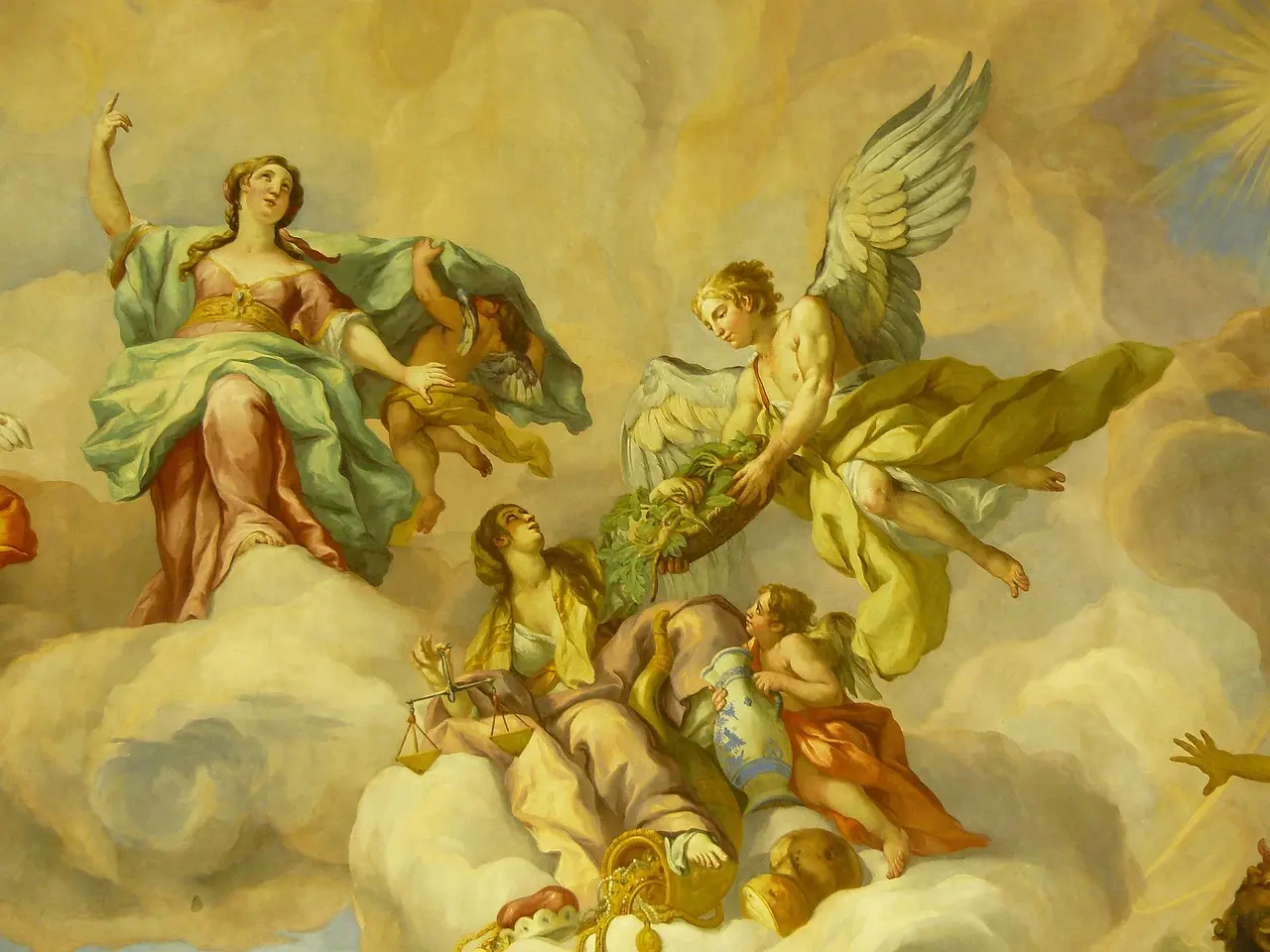
What does heaven sound like? We’ll never know until it’s too late, but if there are angels and harps involved, they will surely be playing ‘the’ Ave Maria. Lifting our gaze into the blue yonder we see poor Gounod sitting on a cloud and cursing his luck that it took another half a century and campaigns by first Johann and then Richard Strauss for the principle of music copyright and composers’ rights to gain legally binding force. But who’s that hurling thunderbolts from a higher realm? We spy the stern countenance of JSB brandishing a divine writ with menaces. Everyone borrows from Bach, but surely no one since Gounod has done it so brazenly, or for that matter with such complete success. This is the mark of a triumphant rip-off, for the original to become absorbed within, almost owned by, its pastiche. The Ave Maria is the cuckoo in The Well-Tempered Clavier’s nest.
Lang Lang performs Bach’s Prelude No 1
The piece started life quite innocently, as a keyboard doodle. In 1851 Gounod married Anna Zimmermann, the daughter of his former piano professor at the Paris Conservatoire. One evening early the following year he sat improvising at the piano – or possibly the harmonium, that obligatory piece of wheezing musical furniture in well-appointed houses of the day – and Pierre-Joseph Zimmermann wrote down his son-in-law’s Bachian riff. Gounod himself adapted verses by the poet Lamartine (‘Vers sur un album’) to the descant and the Ave Maria text soon followed, making a mint for its publisher Heugel, if not for the composer(s).
But wait – who is that peeking out from behind a lower cloud? He has a guilty face, and in truth, he can count himself lucky not to be somewhere much lower and much hotter. That would be Christian Friedrich Gottlieb Schwencke, a long and windy name for an entirely insignificant music copyist. Or so he would have been, had he not inadvertently become the third cook of the Ave Maria broth. Perhaps Schwenke had keener eyes than ears. Editing the C major Prelude for publication around the turn of the 19th century, he spotted that Bach had written his sublime string of arpeggios in four-bar groups – except for bars 21-23. That wouldn’t do, thought our not-so-humble Hamburg copyist: he knew better than Bach, and so he popped a rogue bar 24 into the Prelude. Nice and neat. Just not Bach.
Gounod knew none of this, sitting at his harmonium with Czerny’s popular edition of the WTC on the music-stand. Alas, by then the ‘Schwenke measure’ had become embedded within the score, not so much a cuckoo in the nest as a nylon patch on the Bayeux tapestry, and still stitched into the fabric of Bach’s prelude in freely available, non-urtext editions. What makes this Ave Maria unique? Perhaps it’s the familiarity and ever-surprising shifts of Bach’s chord progressions in combination with the angelic melody devised by the 33-year-old Gounod, who by then was already practised in evoking the heavenly realms in sacred music and just beginning to explore the possibilities of extending that technique to the realm of opera.
Kathryn Stott and Yo-Yo Ma perform Guonod’s Ave Maria:
Who hasn’t covered the Ave Maria? The list would surely be a brief one. From Caruso to Lanza to Pavarotti – can Jonas Kaufmann be far behind? – every dishy tenor of renown has lent his golden tones to the piece, though I have a soft spot for Franco Corelli. Being essentially made from Bach, the possibilities for arrangement and remixing are seemingly limitless. Leontyne Price and Herbert von Karajan pour over the treacle; accompanied by choir and organ, the Dutch contralto Aafje Hejnis strikes a purer tone, no less perfect in its way. In the hands of Pierre Fournier and Yo-Yo Ma, the Ave Maria sits naturally on cello and piano. Among more recent recordings, I’m drawn to the soprano Greta Bradman – yes, granddaughter of the cricketing Don – and the uniquely eerie Japanese countertenor Yoshikazu Mera; both of them respect the nature of the Ave Maria as a prayer, indulging its sticky harmonies without drowning in them. If he’s listening in on his cloud, perhaps even Bach would lay down his writ and light a cigar.
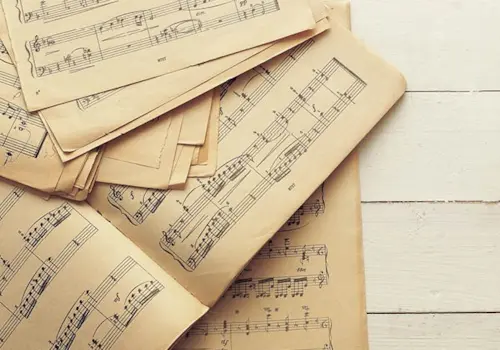
Bach’s Prelude in C appears inside issue 100 of Pianist. Ave Maria appears in duet version inside issue 115. Back issues are available at Pianist magazine.