



29 December 2025
|
Over 80% of the high-end piano market is dominated by Steinway – and it’s not difficult to hear why. Warwick Thompson turns his attention to upright within the Steinway & Sons family, the 120-year-old Model K.
Have you ever had the feeling, if you’ve been lucky enough to sit down at a really good piano (and I mean a really good piano), that your playing suddenly becomes a whole lot better? If so, you’re not alone. You’re in company with no less a legend than Martha Argerich: ‘Sometimes a Steinway has a very strange magic,’ she says. ‘It plays better than the pianist, and it is then a marvellous surprise!’
Better than the pianist? Better than Argerich herself? That’s some compliment. But they come thick and fast where Steinway is concerned. Here’s Vladimir Ashkenazy: ‘A Steinway is the only piano on which the pianist can do everything he wants and everything he dreams. Steinway gives the pianist every opportunity.’ Mitsuko Uchida is pretty pleased with her instrument too: ‘The Steinway is the most versatile instrument I know.’
It shouldn’t therefore be surprising to learn that the company also has an impressive imprimatur in the form of a coveted Royal Warrant. They were first granted one by Queen Victoria, in fact, and continue to hold it.
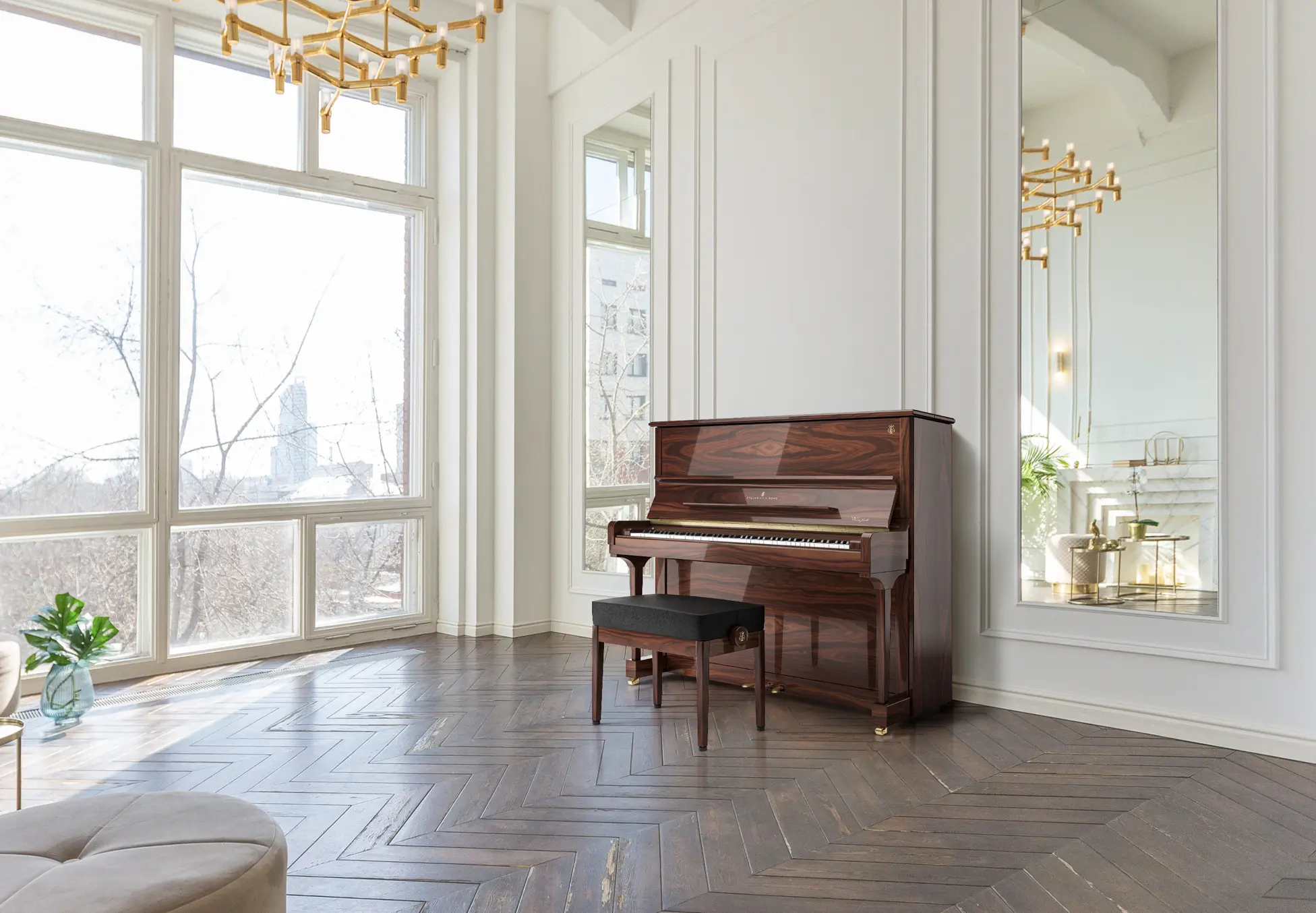
So if you’re tempted to join the ranks of Steinway owners, what might your options be? There are plenty to choose from; Steinway makes grands which stretch from five feet to almost nine feet long (the exquisite, world-conquering action is the same for all of them, I might add). Steinway also make one upright, known as Model K, which celebrated its 120th anniversary in 2024. The dimensions of its mechanism are the same as the mid-sized Model O grand piano (180cm/5’ 10’’): it shares the same soundboard size, and the same string length. They have simply
‘The Model K Dolce pedal creates a truly
stunning soft sound which would be impossible
on any other upright’
Craig Terry, MD of Steinway & Sons UK
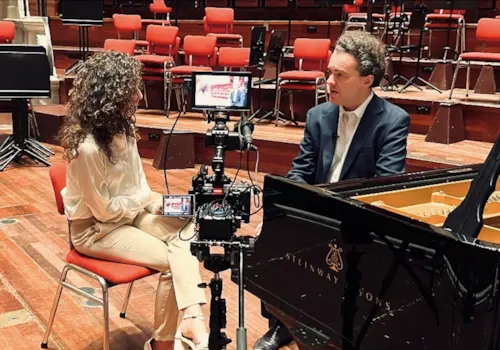
Why might you choose a model K? ‘Our typical buyer is a sophisticated pianist who doesn’t have the room to accommodate a grand,’ explains Craig Terry (pictured), Managing Director of Steinway UK. ‘The Model K is incredibly popular in London, New York, Paris… the sorts of cities in which people often don’t have a huge amount of room, but still want to get the richest possible sound out of their piano. I know that our upright is the most frequently encountered piano that you’ll find in green rooms all over the world, too.’
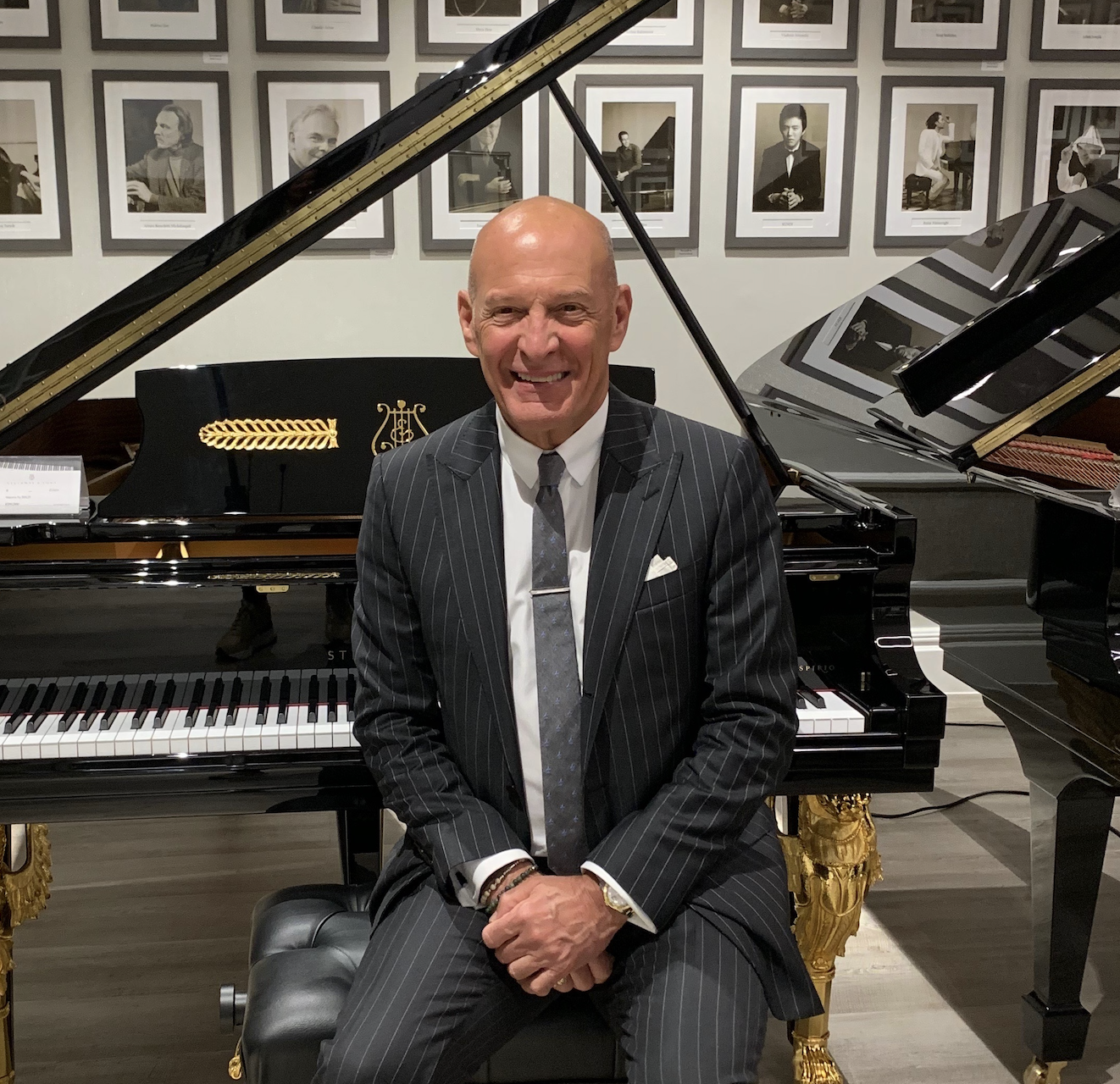
Craig Terry, Managing Director of Steinway & Sons UK
The Model K has recently undergone its own innovatory processes. ‘It was previously a little more difficult to achieve a truly quiet pianissimo on a K,’ says Terry. ‘You could do it, but it wouldn’t be like a grand. So, one of our workmen, who was working on this for over 30 years, came up with the Dolce pedal. It’s a middle pedal, and when you push it down, and leave it down, the hammers go closer to the strings, and the keyboard lowers a little bit, and you can create a truly stunning soft sound which would be impossible on any other upright.’
Beyond belief
Innovation is in Steinway’s very DNA – so much so, that it’s hard to overstate the effect which the Steinway company has had on the world of the piano. From almost the very moment it was founded in New York in 1853 by German immigrant Heinrich Engelhard Steinweg (who later anglicised his name into the form we know today), it has challenged and expanded almost everything that composers, performers and audiences have come to expect from a great instrument.
In his entertaining book Chopin's Piano, musicologist Paul Kildea explores these innovations in some detail, to show exactly how the genteel types of piano with which Chopin was familiar – his favoured Pleyels and Erards – became superseded by ground-breaking Steinway models. In 1859, writes Kildea, Steinway was awarded a patent for a new design: ‘Tilting the bass strings only ten degrees or so… and then crossing them over the lower-middle strings, granted the low octaves unparalleled power and definition. No piano maker had attempted this before: the physical tension was too great for a wooden frame. Steinway solved this problem by binding the whole lot into a single cast-iron frame the size of a concert harp laid flat. It was such a simple idea, as good design so often is.’
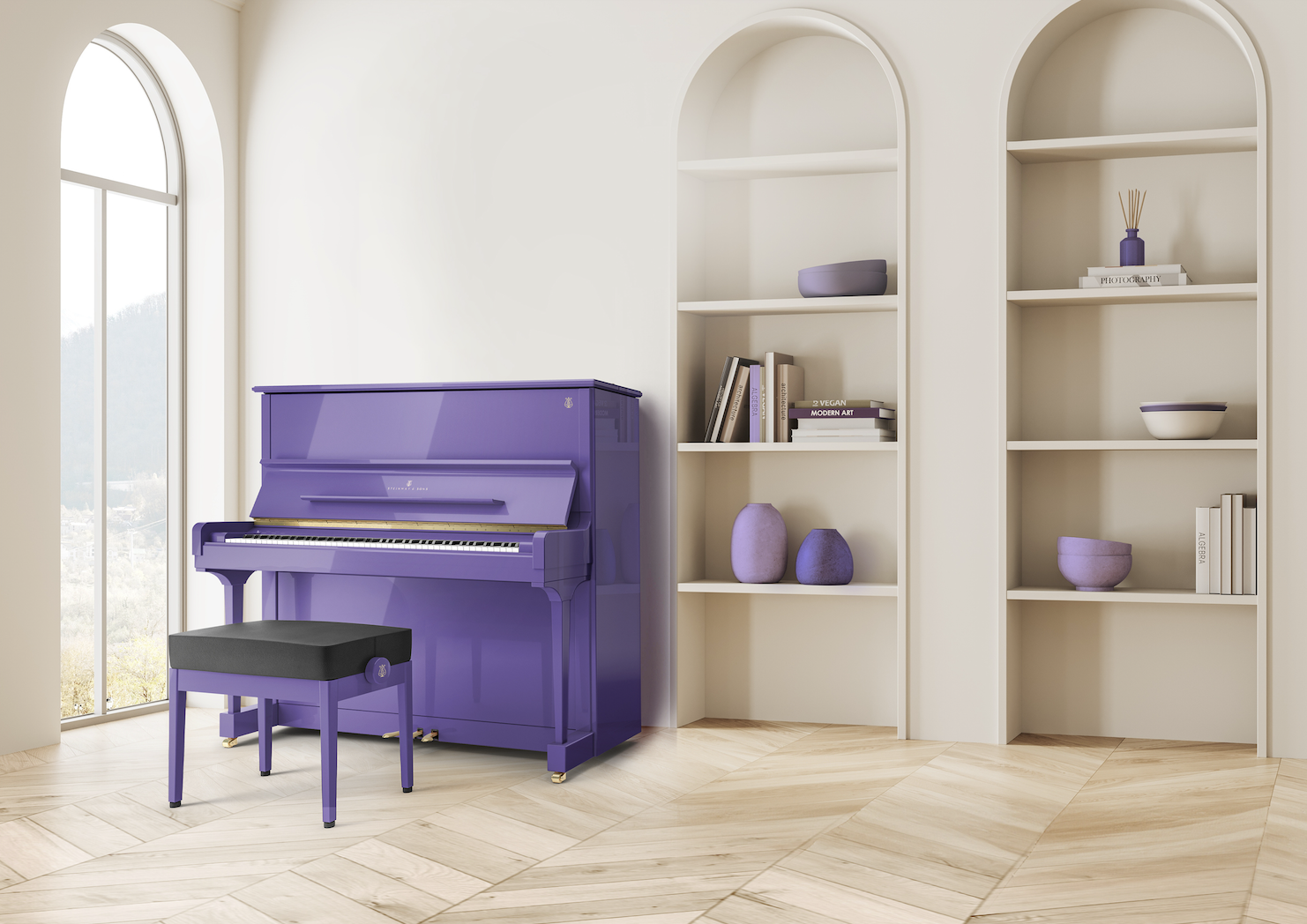
A vivid purple for the bravehearted
And this wasn’t their only revolution. A few years later, the company invented a very clever wood-bending vice. It was ‘a device that shaped the piano rim into a single piece of hardwood, rather than multiple bits of wood and joist thrust together,’ Kildea continues. ‘The iron frame could then be slipped inside, all fitting together into a continuous piece of carpentry. The aim was to have as few separate parts as possible so that nothing subtracted from the instrument’s governing principle: a resonant, dynamic soundboard transmitting the vibrations of a hammer-struck string.’
Chopin, who died in 1849, could barely have imagined the new power and resonance which these new Steinway pianos were to deliver. One historian believed that his music was actually waiting for such a sound, rather in the manner of an Old Testament prophet dreaming of unimaginable future salvation. ‘Chopin grew into the piano only after his death,’ says musicologist Malcolm Gillies epigrammatically. Thanks to Steinway, of course.
Work of art
Suddenly, with Steinway, so much more was possible: There was more power, able to fill ever-expanding concert halls; more delicacy, able to project the lightest of staccatos; more ease, able to sustain the most fluid of legatos. The works of Liszt and Rachmaninov would be unthinkable without the sound which Steinway created.
Further innovations kept coming, and as of now, Steinway has been granted a mightily impressive 139 patents for its technological advances. I doubt if even Elon Musk has that many.
And so it continues. Steinway continues to evolve and to innovate, but, importantly, some parts of the craft remain traditional. Even in this age of mind-bending AI and technological wizardry, 80% of all production work on a Steinway piano is carried out by people and not machines. The company proudly claims that each instrument is ‘both an original and a work of art’ and you can see why.
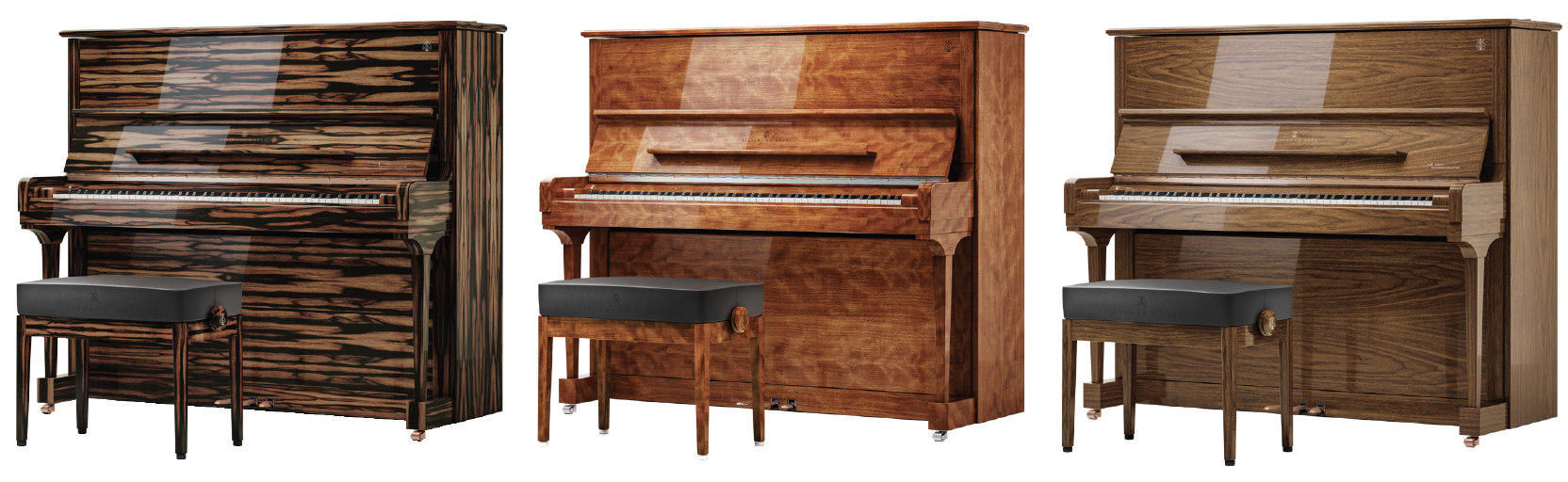
Some of the Masterpiece 8x8 veneers
Regarding the Model K, there is also an option to personalise the instrument in order to make it appear even more a work of art. As well as in the standard polished ebony, it is available in the Crown Jewels collection, in which each piano is adorned with a diamond in the keyboard lid. The Masterpiece 8x8 collection is available too, which features eight different veneers limited to eight uprights each: these veneers including Oak, Eucalyptus, and Santos Rosewood and American Walnut.
So, if you’re dreaming of finding an upright, but don’t want to compromise on sound, (and have the necessary funds, of course) then the Model K might be the answer to your prayers. Can’t you just imagine sitting down at it, and becoming a better pianist, just as Martha Argerich suggests you might?
And while we’re speaking of imagining… did you know that John Lennon wrote Imagine on a Steinway upright?
Where a Steinway is concerned, really everything seems possible.
Learn all about Steinway & Sons and its selection of grands and uprights