






13 December 2025
|
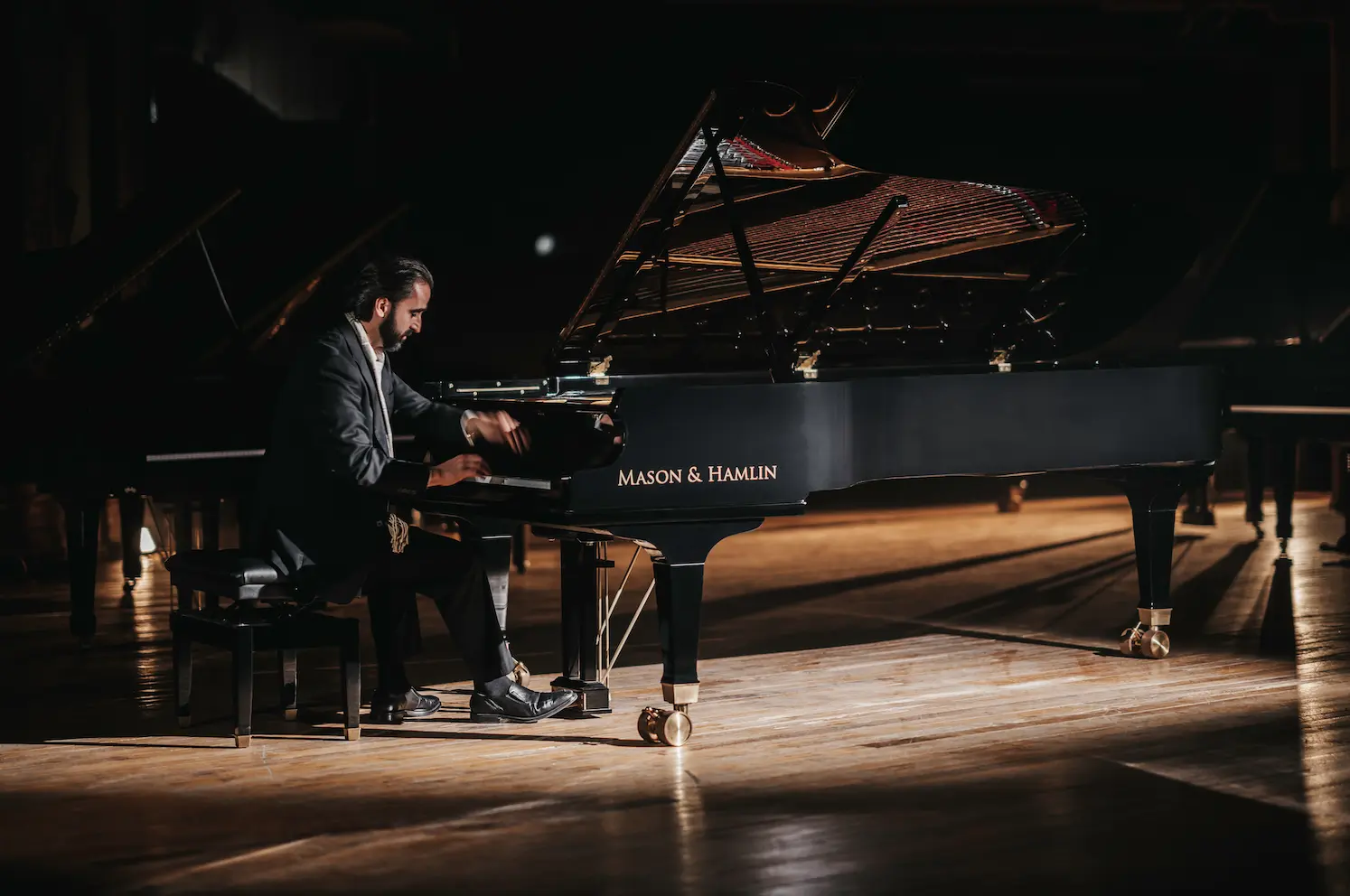
Discerning pianists who are looking for the highest-quality handcrafted instrument should give Mason & Hamlin pianos a try, says Erica Worth, who is impressed by the vision of the American maker.
Heritage, longevity and innovation; concepts that define one of America’s greatest piano manufacturers – and it’s not the one you might think. Founded in 1854 by two men, one of them a musician descended from the Mayflower pilgrims, the other a mechanic and inventor, the new company quickly established not only a local but a global reputation for excellence enhanced, later, by innovations that would impress some of the greatest composers. The company, of course, is Mason & Hamlin.
Today based in Haverhill, Massachusetts, not far from Boston where the company was founded during America’s piano-making boom, Mason & Hamlin is, in this relentlessly digital age, the focus of refreshingly patient, artisanal craftsmanship. Over six floors, craftspeople, some of whom have been with the company for more than 25 years, painstakingly build around 170 pianos a year. Each one takes 12 months to make. Mass-production this is not.

That the company continues to thrive at the premium end of a fiercely competitive market is down to those three aforementioned concepts. But there’s another: vision. In 1996, two men with backgrounds remarkably similar to the company’s founders purchased the company, which had changed hands several times, with the intention of rediscovering the qualities that had once made Mason & Hamlin pianos among the world’s best. At the same time, they aimed to restore its appetite for innovation, an appetite that would ensure each instruments’ longevity far into the future. Brothers Gary and Kirk Burgett, the former a celebrated pianist and teacher, the latter an inventive technician and builder, were those visionaries.
‘When Gary and I purchased the company in 1996, we wanted to restore the company’s reputation as maker of the world’s best piano, built in the US, and we believe we have done that,’ says Kirk, president of Mason & Hamlin. It was a bold ambition and to understand just how bold, we need to trace the story of Mason & Hamlin and the people behind it.
A star piano is born
Mason & Hamlin was founded by two men, Henry Mason and Emmins Hamlin. Henry, a member of one of America’s oldest families renowned for its involvement in the arts, was a talented pianist. His brother, William, was one of America’s foremost classical pianists and, in fact, Franz Liszt’s first American pupil. Their father, the renowned hymn composer and educator, Lowell Mason, was a visionary who introduced music to American public schools and founded the Boston Academy of Music, the nation's first institute of higher musical education. His passion for making music accessible to all inspired Henry, who carried on his father's lifelong dedication to music.
Co-founder Emmons Hamlin was a brilliant mechanic, innovator and inventor. While working at the melodeon factory of George A. Price and Company of Buffalo, Hamlin invented a way to voice organ reeds so that they could imitate the sound of a clarinet, violin and other musical instruments. It was a significant development for organs and one that is still in use today.
With these two men working together, the results were bound to be impressive. In fact, their first product was an organ, so good it won First Prize at the Paris Exhibition of 1867.
With Mason & Hamlin’s reputation for excellence now established, in 1881 the company turned its attention to pianos, then enjoying a golden age. Around the same time, the two founders passed the company to a new generation: Mason’s son Henry L. Mason and Richard W. Gertz, a gifted piano designer and technician with experience of premium pianos. With Henry applying artistic insights gleaned from his relationships with leading concert pianists to the mix and the company’s commitment to meticulous craftsmanship preserved, the new Mason & Hamlin pianos quickly attracted attention.
Securing the soundboard
Among the features garnering interest were Richard Gertz’s innovations. They included the Screw Stringer and Crown Retention System, technologies that made a Mason & Hamlin piano a byword for tuning and tonal stability and which, in the case of the Crown Retention System, contributed to every instrument’s glorious, full-bodied tone. Like the battle for supremacy between video formats Betamax and VHS, the Screw Stringer lost out to the universally recognised pin block solution, which was eventually adopted by the company. Nevertheless, it was an intriguing idea. Rather than use tuning pins driven into a wooden block perpendicular to the strings, with the Screw Stringer system the piano's strings were hooked onto screws which were turned to adjust their tension. However, it required special tools few tuners were prepared to invest in and in the early 1900s fell out of favour.
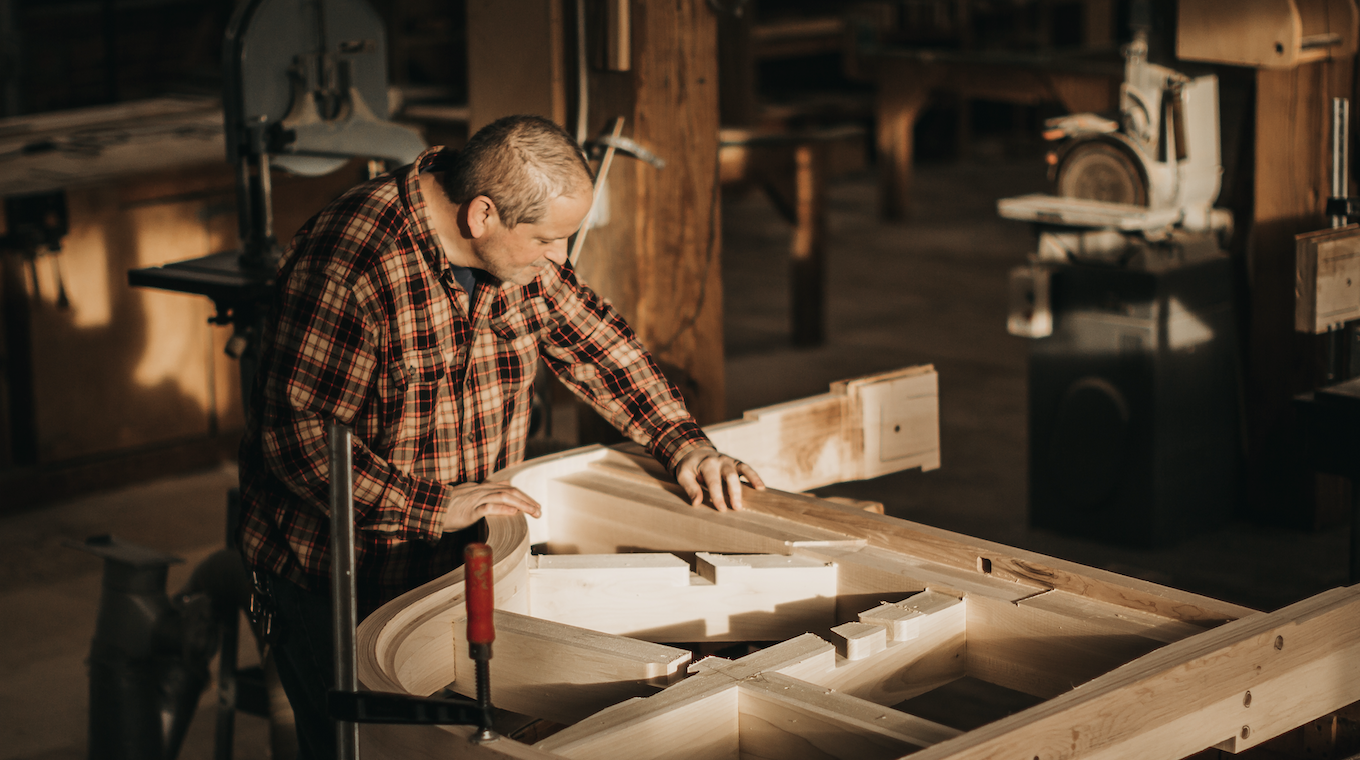
Working on the inner rim
Not so, the Tension Resonator, which is still a feature of selected Mason & Hamlin pianos to this day. This remarkable device secures the parts essential to the instrument’s rich and enduring tone. Richard Gertz had recognised the rim’s role in reflecting the energy produced by the soundboard, thereby enhancing a piano’s power and sustain. He knew that to preserve the piano’s tonal and dynamic qualities it is essential that the rim’s shape is maintained. Looking much like a large spider (apologies, arachnophobes!), the central body of the Tension Resonator has arms that extend to the piano’s sides or rim.
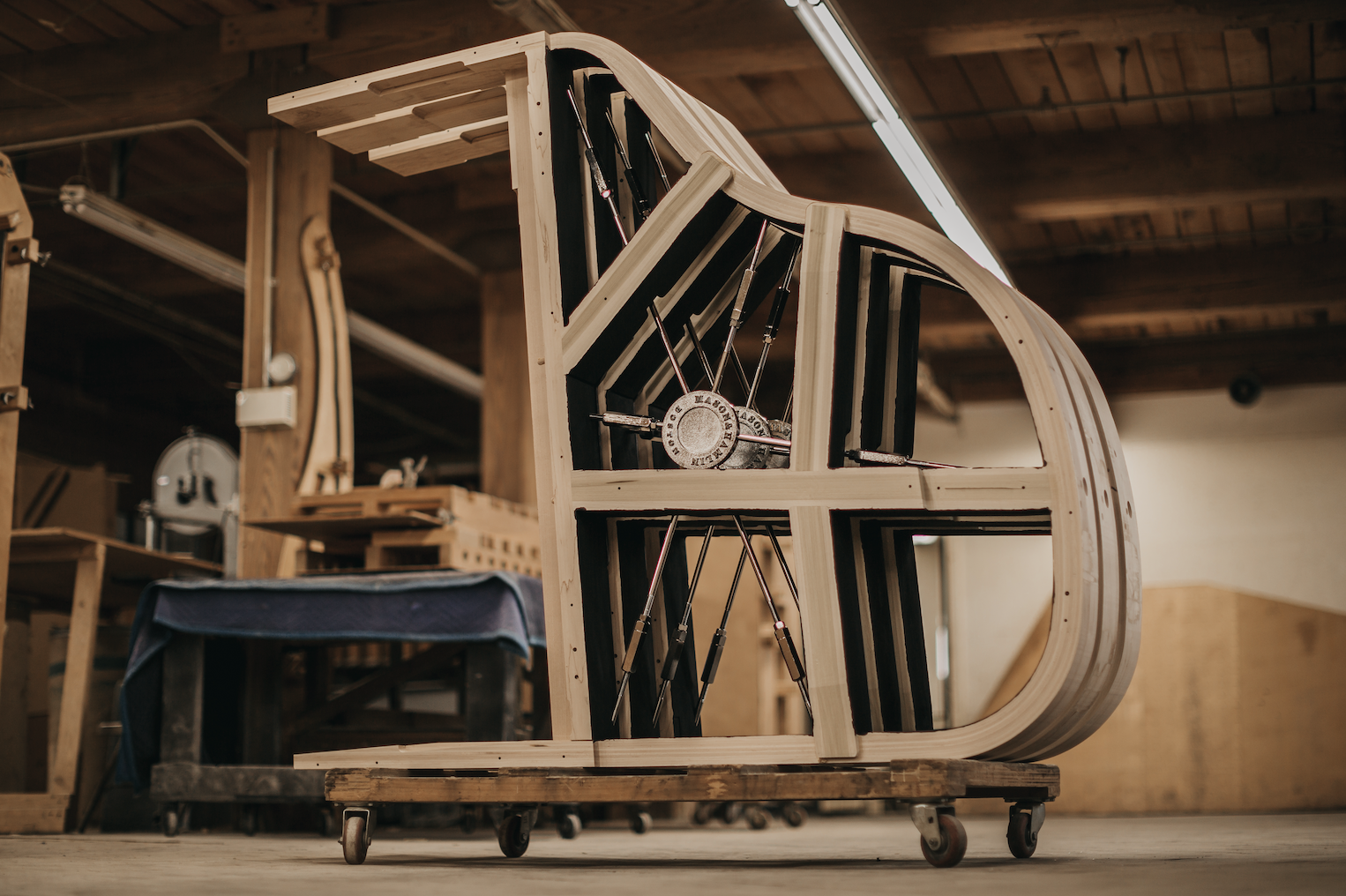
A fine view of the Tension Resonator
It is one part of an over-arching system that Mason & Hamlin call the Crown Retention System. The ‘crown’ part of its name refers to the raised area of the soundboard that is key to the piano’s singing tone. Securing the rim with the retention system secures the shape of the crown, so preserving the piano’s tone for years. Ensuring everything is firmly anchored are the piano’s heavy case parts which hold and reinforce the structure of the instrument.
Thanks especially to this feature and, of course, to the manner in which the pianos were built, Mason & Hamlin pianos soon became known as the world’s finest. Indeed, recognition eventually came from no less a figure than composer-pianist Sergei Rachmaninov, who, in 1919, shortly after her emigrated to America, used a Mason & Hamlin piano to record his performances on Ampico piano rolls. He said of the pianos, ‘I desired to play Mason & Hamlin pianos because I believe they would be the most satisfactory to me in my work. In my opinion, these instruments must satisfy all musicians and artists of its first rank, as well as music lovers in general. I feel that if I have succeeded in making even the slightest impression upon the public by my playing, a great part of my success is due to your instruments.’
The following year, during his inaugural American tour, Maurice Ravel selected Mason & Hamlin instruments for his performances. He said, ‘The Mason & Hamlin pianoforte serves magnificently the composer’s concept by its extensive range in dynamics, as well as quality of tone, not short of being a small orchestra. In my opinion, it is a real work of art.’
Follow that!
An action built to last
In fact, fast forward to 1996 and that’s exactly what Gary and Kirk Burgett pledged to do when they purchased Mason & Hamlin, vowing to restore those qualities and technologies that had characterised the firm’s instruments, while taking them forward for a new generation of musicians and audiences.
Guided by the founders’ belief that more than a mere instrument, a piano is a vehicle for expression, they applied the original scale designs and features to their new pianos. To do so, using advanced software, they translated the company’s original specifications into data suitable for a modern factory using high-tech machinery in combination with craftspeople employed in refining and finessing the instruments. It was an astonishing undertaking that demonstrated the brothers’ commitment to the enterprise.
‘Richard Gertz changed how the pianos were built,’ says Kirk. ‘There was no way we were going to depart from that. He laid the groundwork for the pianos we build today.’ Of course, having embraced Gertz’s design and production ethic, the new owners had now to consider what new innovations they, too, could bring to the modern Mason & Hamlin piano, as Kirk explains. ‘Gary and I wanted to continue the firm’s legacy as the manufacturer of the world’s finest pianos. We respected the rich traditions of the piano industry, yet over time we saw opportunities to innovate, improve and contribute. We believe we’ve done that including with the launch of the Wessell, Nickel & Gross Advanced Composite Action on selected ranges.’

Mason & Hamlin's composite action
The piano is a percussion instrument with a unique mechanism called the piano action. Wood has been used in piano actions since the invention of the instrument. For all 88 piano notes to feel and respond consistently – the same touch, resistance and dynamic capability – technicians spend significant time refining every one of a piano’s 88 actions. The goal is to ensure the pianist does not have to think about which keys need to be played harder or softer for the piano to respond consistently. Instead, they can devote their full attention to making music.
However, the problem with wood is its inconsistency; its density and strength can vary by up to 40% from one tree to another. It also warps with changes in moisture levels, especially noticeable when the seasons change. This warping affects the action’s performance.
To counter these problems, Kirk and his team developed the composite action, a much more stable solution that ensures consistently high performance. ‘No other small piano company has invested millions of dollars into redesigning and improving the piano action at this level,’ says Kirk. ‘We are the only manufacturer that offers a fully composite action that boasts both composite shanks – responsible for transferring the force from the key to the hammer – and composite hard bushings. The shanks are engineered to be uniform in density, strength, and flexibility, creating a consistent response across the entire keyboard. The bushings control the pivot points in the action and must maintain the correct tension for proper touch. Our unique composite hard bushings last four times longer than traditional wood-and-felt bushings. In the hands of a pianist, these advancements become more than engineering – they become the foundation of a touch and tone that stay consistent no matter the demands of the music.’
Virtuoso instruments for virtuoso pianists
Further evidence of Mason & Hamlin’s appetite for improvement and innovation comes in the form of the company’s new premium Virtuoso X Series (VX) that represents the culmination and celebration of all the advances pioneered and introduced by the firm. The grand pianos in the new range are represented by five models ranging in length from the 5ft 4in Model B to the 9ft 4in Model CC. While each piano has its own distinct character, all share the company’s trademark rich and full-bodied tone achieved through features including the thickest hard-rock maple rim for improved volume and projection, a full-perimeter plate for enhanced sustain, an oversized Eastern white spruce soundboard for a fuller, richer tone and the aforementioned Wessell, Nickel & Gross composite actions for a light, fast and responsive touch. In addition, the new pianos boast the company’s famous tension resonator for longevity and long-lasting tonal stability plus an optimised bridge placement for improved tonal transfer. In addition to the grand pianos, for the musician requiring grand piano characteristics in a compact, vertical form, there is the VX Model 50 upright piano featuring a variation on the Tension Resonator.
‘We have met the demands of modern virtuosos with the creation of the Virtuoso X Series Model CC concert grand piano,’ says Kirk. ‘Recognising the need for greater dynamic range, control, sensitivity and responsiveness we have weaved new, cutting-edge design elements into Mason & Hamlin’s traditional framework. The success of these innovations has opened a new chapter for the company.’
Mason & Hamlin’s range of pianos continues with the Artist Series of grand and upright pianos. ‘The Artist Series – our “Piano for Every Artist” – is the ideal entry point into the Mason & Hamlin family,’ continues Kirk. ‘Designed with both the player and the instrument in mind, it offers a rich, singing tone, premium materials such as beech rims and a solid spruce soundboard. It also features our composite action for a touch and feel that remains consistent longer than other pianos.’
‘We have met the demands of modern virtuosos with the creation of the Virtuoso X Series Model CC concert grand piano’
Kirk Burgett, President, Mason & Hamlin
Many of Hamlin & Mason’s instruments are displayed at the company’s factory. It’s the perfect place to play and compare new models, with experts on hand to provide advice and assistance. Visit the website to schedule a visit. For customers situated on the West Coast there’s Mason & Hamlin’s factory store in Sacramento. For other locations, customers should visit the website for their nearest dealer.
As Mason & Hamlin looks forward to the next 170 years of its story, Kirk is confident that in the new Virtuoso X Series, the company has laid the foundations for the next chapter in its story. ‘These pianos honour the original vision of our founders while adding a new chapter: one shaped by creativity, innovation, and the same passion that inspired the company from the beginning.’
Further information about Mason & Hamlin, including in-depth descriptions about the company's many innovations, can be found at www.masonhamlin.com.