


15 December 2025
|
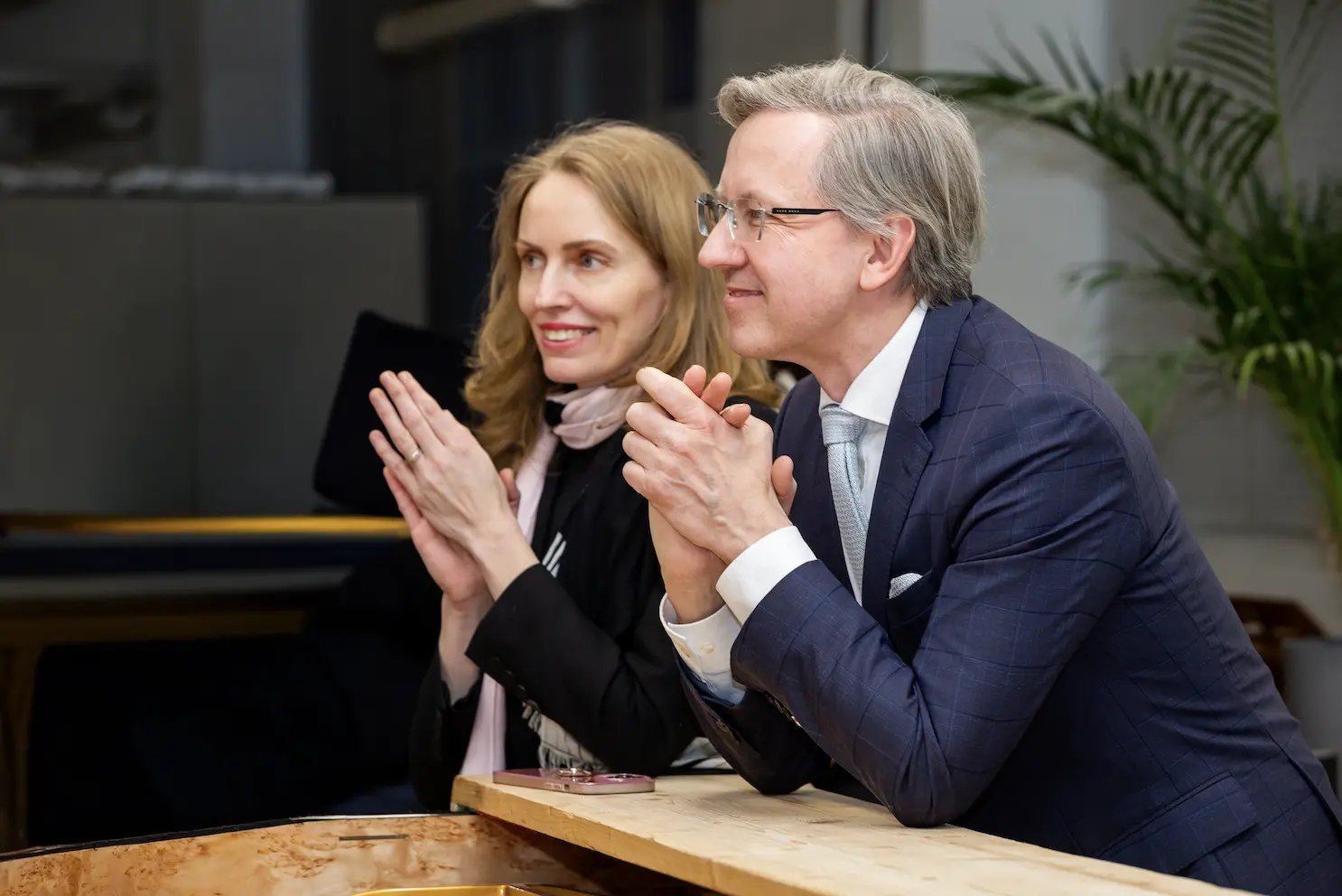
Known for their beautiful singing tone, Estonia Piano Factory pianos have had a huge impact on the USA market. Now, via an exciting new partnership with Coach House Pianos, the company has its sights on conquering the UK. Warwick Thompson looks at the ‘special ingredient’ which has pushed Laul Estonia to the top of the league table.
Estonia has a major claim to be called The Land of Song. It hosts one of the world’s largest choral festivals every five years. There are 700 choirs in the country, as well. And one (slightly fanciful) etymology of the word ‘Estonia’ even suggests that it derives from the Latin ‘est’ and ‘tonus’, meaning ‘there is sound’ or ‘there is music’. Whatever the case, it’s fittingly ben trovato.
In addition, another major claim to Estonia’s lyrical importance can be found in the top-drawer quality of the instruments made by Estonia Piano Factory (Estonia Klaverivabrik). Their tone is exquisitely rich and even, their action as easy and natural as breathing, and their responsivity instantaneous. It’s not for nothing that they have earned the nickname ‘the singing piano.’
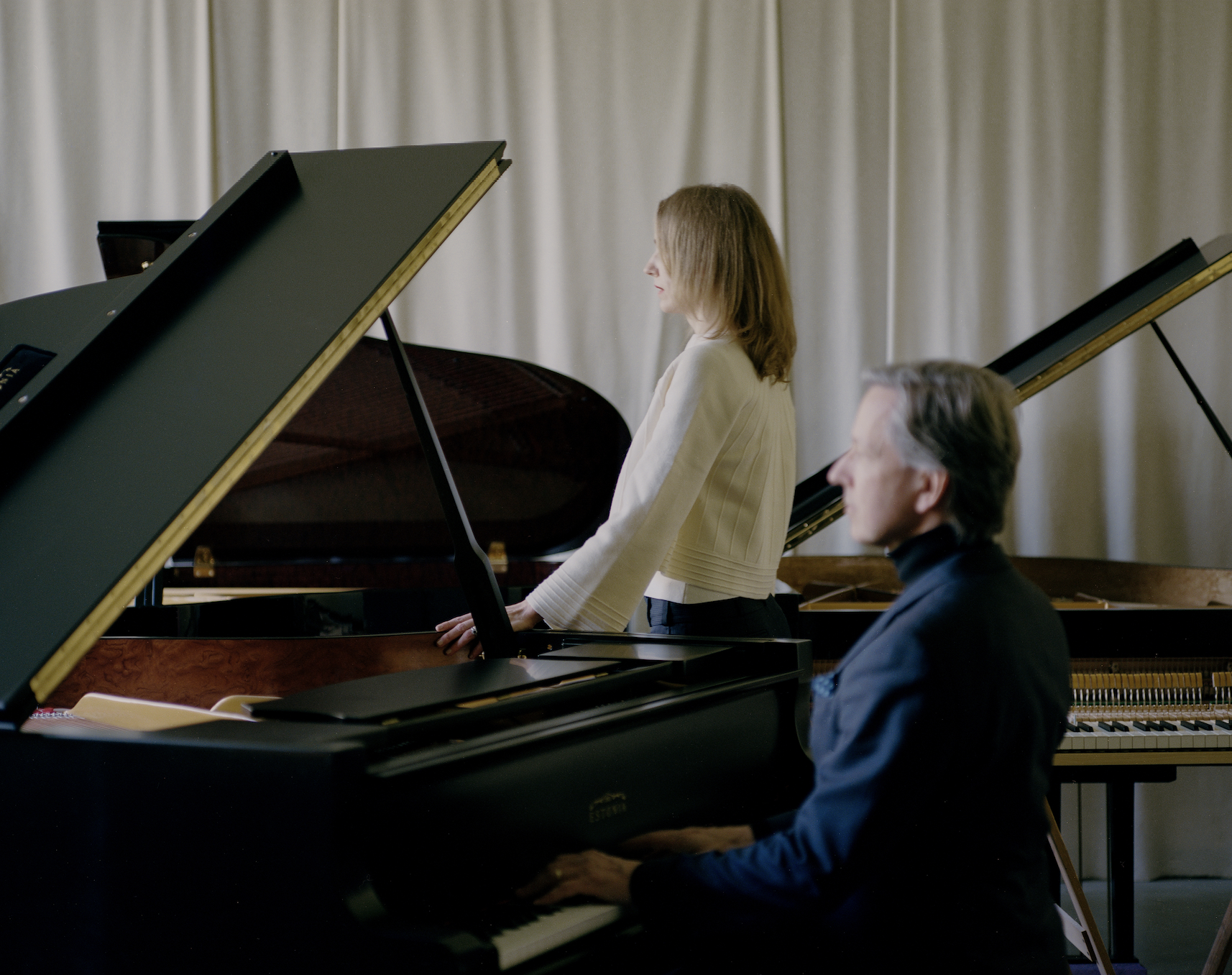
All this is down to the Juilliard-trained Estonian pianist Indrek Laul (whose surname, coincidentally, means ‘song’ in Estonian). It is he, with the help of his family, who has guided the company to its elevated current position, and insisted on the creation of a piano which can compete with the very best, at a significantly lower market price.
'Triin and I personally work with the technicians for many hours
on every instrument, creating the tone and voicing,
and a keyboard will not leave the factory until we have personally signed it off’
Dr Indrek Laul
Indrek and his pianist wife Triin (both pictured) note that their role as performing musicians is vital to the company’s success. Says Laul: ‘Our company is not owned by a corporation, or stock-market shareholders, but by musicians – and I’m not sure there are many other piano factory owners or company CEOs who could go on stage and perform, say, the Liszt B minor Sonata. Triin and I personally work with the technicians for many hours on every instrument, creating the tone and voicing, and a keyboard will not leave the factory until we have personally signed it off.’
Best ingredients
Another element of the firm’s success can be found in their insistence on using only the highest quality European components. The soundboard is made from spruce from the Swiss Alps. Because trees grow slowly there, with many growth rings per inch, the white grain is beautifully tight and excellent for resonance. ‘It’s the highest quality soundboard that can be found in Europe,’ says Laul. He is proud to note that it is also made by hand. ‘It is surprisingly more precise than using a machine. The craftsmen are able respond to the individual character of every piece of wood.’ The plate (‘harp’) of the piano is cast in Finland, and then finished in the factory. The hammers are German: either Renner or Abel, depending on the individual needs of the instrument.
But all these elements would not combine to give the particular richness, variety and evenness of the famous singing tone, were it not for the ‘special ingredient’. In the early 2010s, Laul was hearing from more and more pianists that they were searching for a warm ‘golden era’ tone of piano, often found in the older Hamburg Steinway. After much puzzling, he realised that a crucial element of this sound was in the non-tapered (or ‘non-diaphragmatic’) soundboard. Those older pianos had soundboards of one consistent thickness, in contrast to later models which had tapered soundboards. After much high-level acoustic experimentation, Laul discovered the perfect even thickness of soundboard for his pianos, and has never looked back.
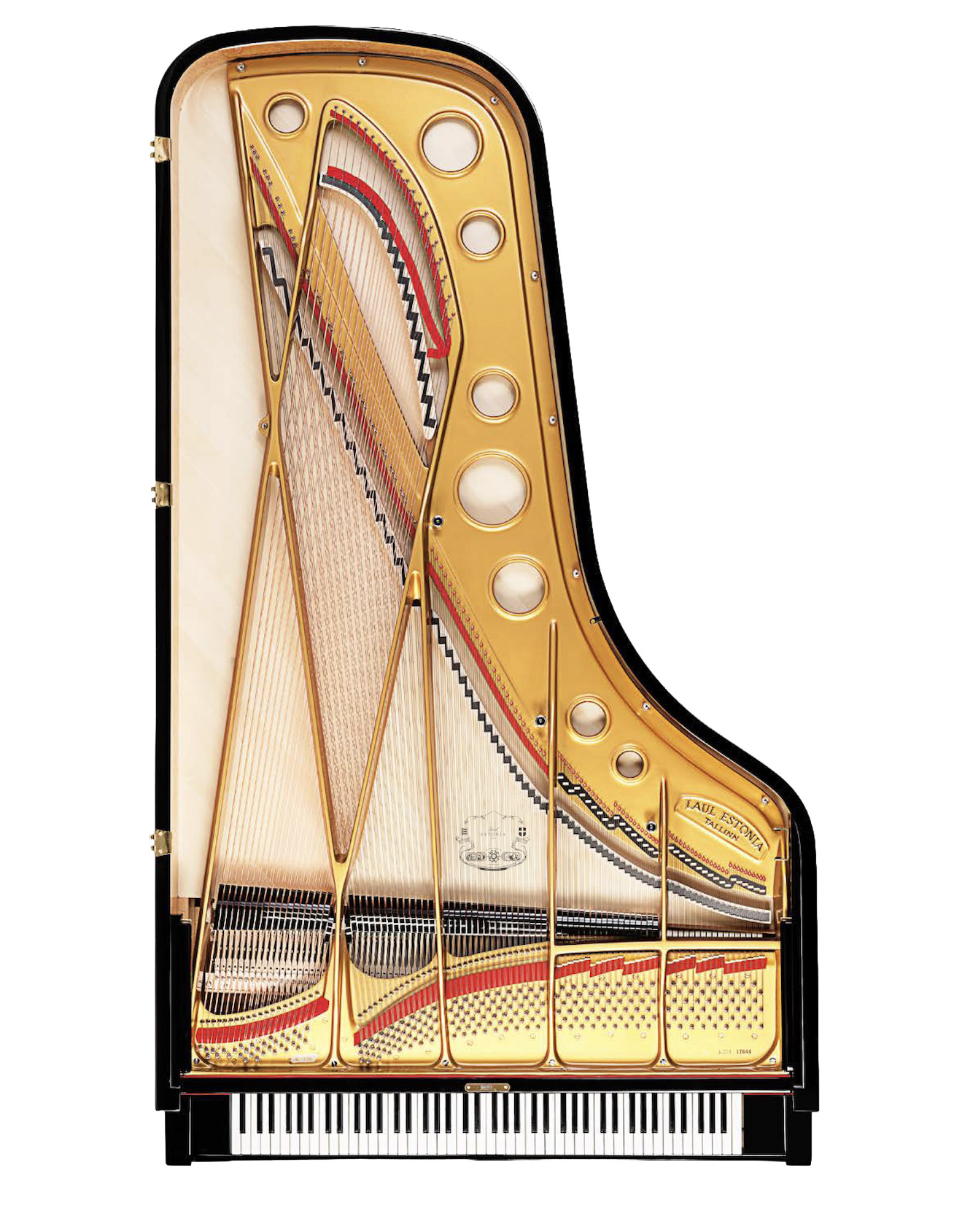
Laul Estonia Concert Grand L274
It has been a monumental journey for both him and the company. It began life in 1893, when Ernst Hiis-Ihse created a hand-made piano with exquisite depth and richness of sound which became the prototype for future Laul Estonia pianos. After the Second World War, when Estonia was occupied by the Soviets and transformed by their centralising powers, Hiis-Ihse’s company was designated the sole piano factory (there could only be one, naturally) for the entire Eastern Bloc. It was tasked with producing instruments for all the concert stages of the eastern empire. At its height, the company was making 500 instruments a year.
Unfortunately, as with so many other Soviet goods in such a sclerotic command economy, quality declined noticeably. Good raw materials were impossible to source, and innovation was frowned upon. For this reason, the company struggled to adapt to a demand economy when Estonia regained its independence in 1991. The company was privatised in 1993, but in that year only 49 pianos were made.
Dreams can come true
It was at this point that Indrek Laul, while studying at Juilliard in New York, saw the enormous potential of the factory in his homeland and began to dream of returning it to its former glory. He began to buy shares, and eventually became the majority shareholder. He was adamant it should be a family-run business, so his parents, both professional musicians, came to work at the factory. His father Venno, a respected choral conductor, became CEO, and his mother Reet (the principal repetiteur for Estonian Opera) headed the quality control team. In 2018, Indrek himself took over as CEO.
With significant investment, more and more improvements were made: prime materials were sourced, and innovation was prized once more. Now the company produces 120 pianos a year, in five grand and concert-grand models: L168, L190, L210, L225, and L274.
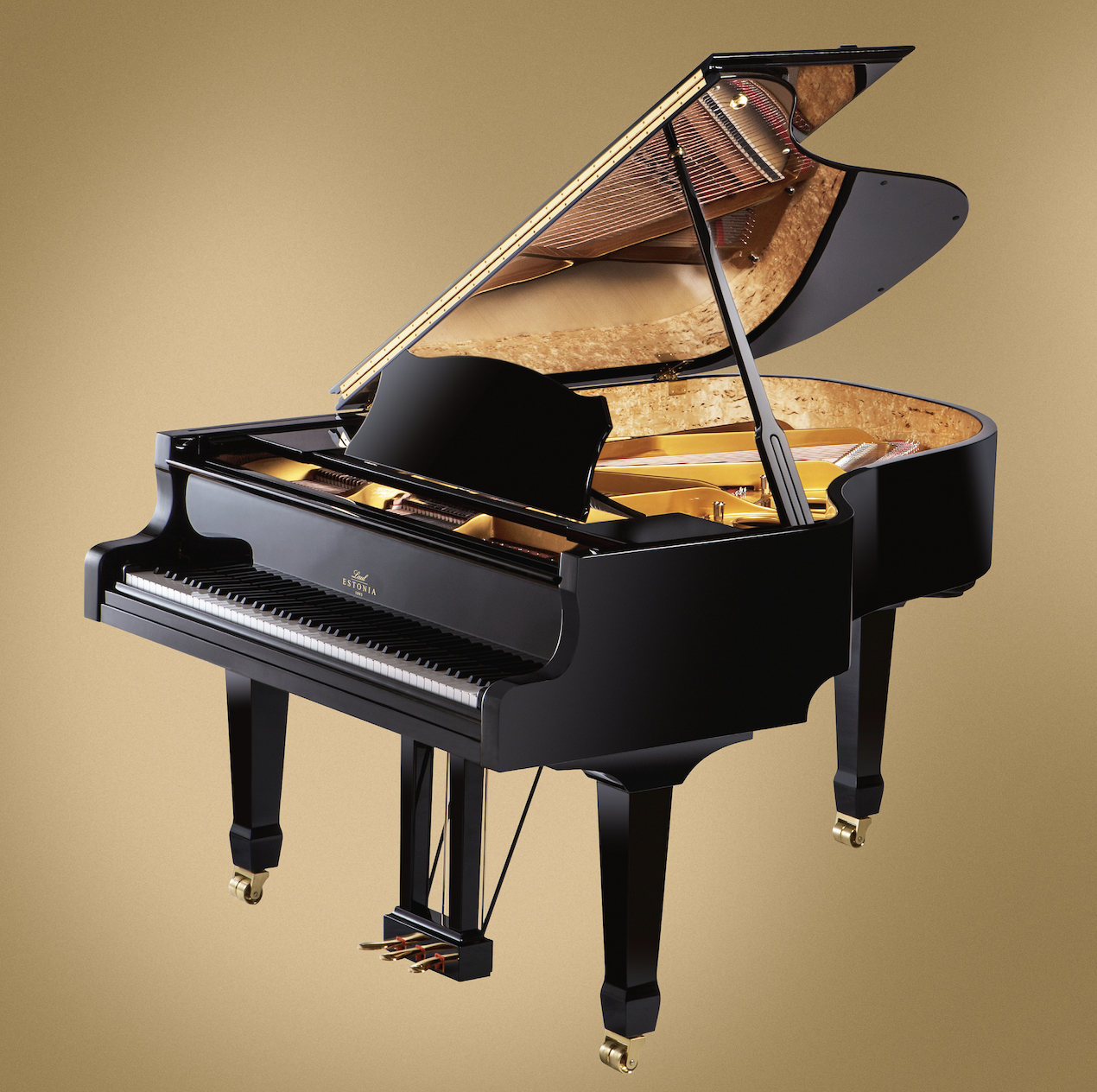
Laul Estonia Parlour Grand L190
Laul Estonia has now also regained its place as one of the foremost piano manufacturers in the world: so much so, that it was honoured by being depicted on a Estonian postage stamp, to commemorate ‘a great and beloved item of the country.’
And all because of the glorious singing tone which Dr Laul has worked so hard to achieve. ‘I hope the piano can do almost anything – it’s so lyrical that you can avoid any overpedalling in, say Mozart,’ he says. ‘You can make it sound as full and rich as an organ, when Liszt demands such an effect. You can play Beethoven so that all the nuances and details of the music come out. In each case, the singing element affects the performance, so that one can play more authentically.’
Laul’s achievements have won many admirers. Conductor Neeme Järvi is a huge fan: ‘Superb tone and touch… one of the best kept secrets in piano making today,’ he says. Pierre Laurent Aimard agrees: ‘The piano has such warmth and richness of sound, with noble acoustic properties.’ Marc-André Hamelin was so impressed that he bought one for himself, and says that ‘it’s a pleasure to work on such a fine instrument.’
With the new partnership with Coach House Pianos, more people than ever before will be able to discover the joys of a Laul Estonia piano. ‘We’re honoured to be working with them,’ says Laul. ‘They’re a family business, just like us. It’s a match made in heaven.’
Images:
Main: © Janne Lass; © Silver Mikiver & © Jüri Seljamaa
www.estoniapiano.com / www.coachhousepianos.co.uk