







John Evans offers a noisy applause for the silent piano, a full acoustic instrument that can become silent with a switch of a lever. He surveys today's many silent options.
Silence is golden, sang the Tremoloes in 1967. It’s a sentiment many people listening to another’s piano practice might agree with. However, pianists might also say that being able to play without consideration for others would actually be preferable as well as enormously liberating. The solution? The silent piano. It sounds like a contradiction but such instruments actually exist and are becoming very popular. By stopping the hammers just short of the strings and instead, as the keys are pressed, hearing the sampled sounds of a grand piano through headphones plugged into the instrument, day or night the ‘silent pianist’ is free to play without disturbing family or neighbours; even in the same room when others are watching television or reading.
Another term for such an instrument is ‘hybrid’ piano since it’s both an acoustic piano and a digital piano in one. Almost every piano maker offers them and if they don’t, they can probably retrofit a silent system to one of their new acoustic instruments. In fact, it’s possible to purchase a system and have it fitted to your own piano. If you like the instrument and can’t afford to upgrade to a new one with a silent system already installed, it’s a cost-effective solution.
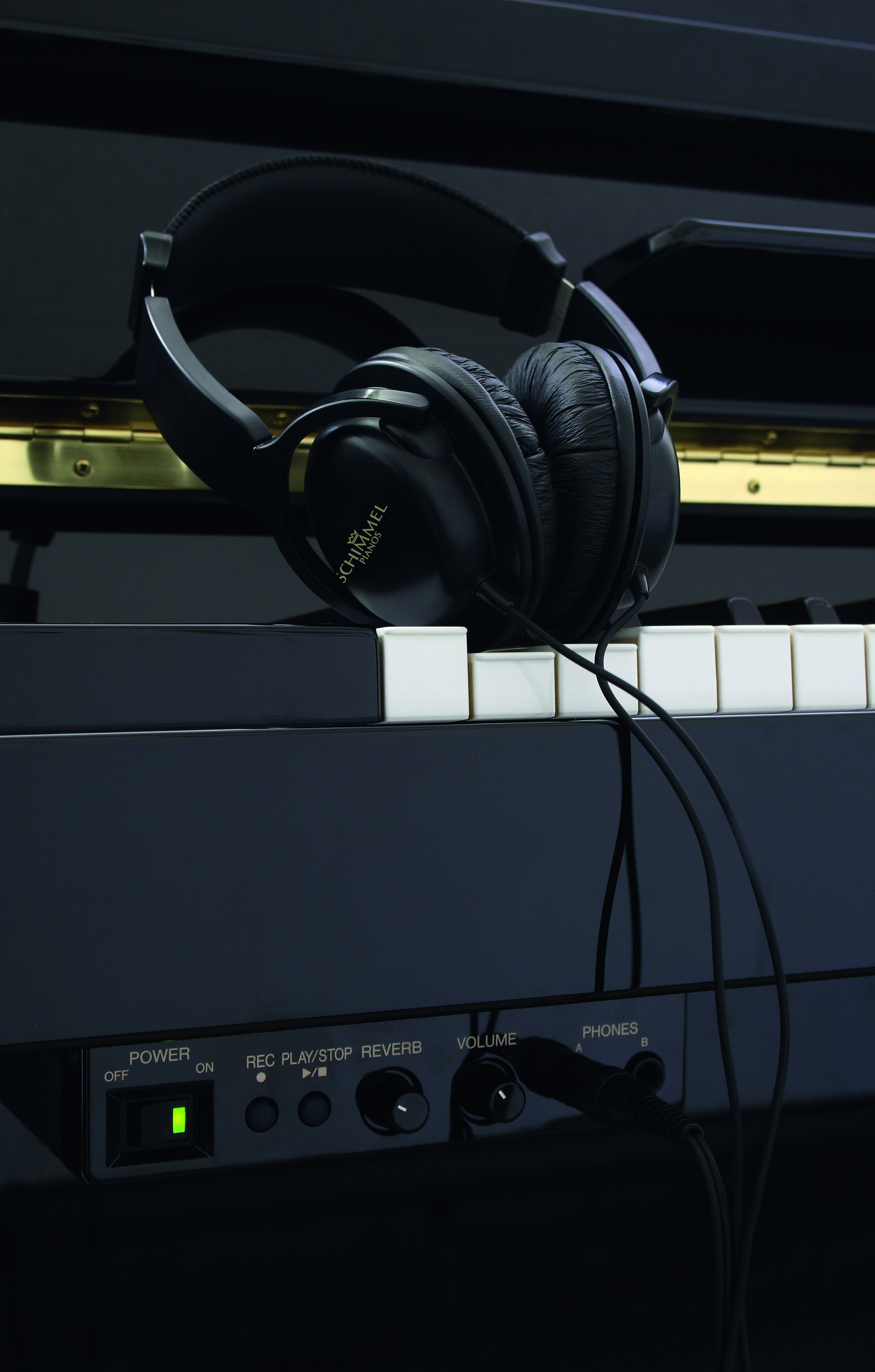
Schimmel TwinTone
The case for a silent piano
Yamaha offers a wide choice of instruments in its branded Silent ranges with upright pianos represented by everything from the entry-level b1 to the flagship SE. You can even have a Silent grand piano, the range spanning the GB1K to the mighty C7X. Yamaha says 50% of the pianos it sells are hybrid (Silent and TransAcoustic, the latter an acoustic piano that uses the soundboard to amplify the sound when in digital mode). Why are people buying such instruments? After all, they’re not cheap. For example, a Yamaha b1 Silent is around £2170 more expensive than its pure acoustic equivalent while at the other end of the price spectrum, an SE 132 upright is £6000 more expensive. However, such comparisons overlook the extra technologies and benefits Silent instruments have over their pure acoustic equivalents; technologies and benefits including not only the ability to play silently but also to change instrument sounds, record and hear your playing, access practice materials via Yamaha’s associated Smart Pianist app and even transcribe recorded music.
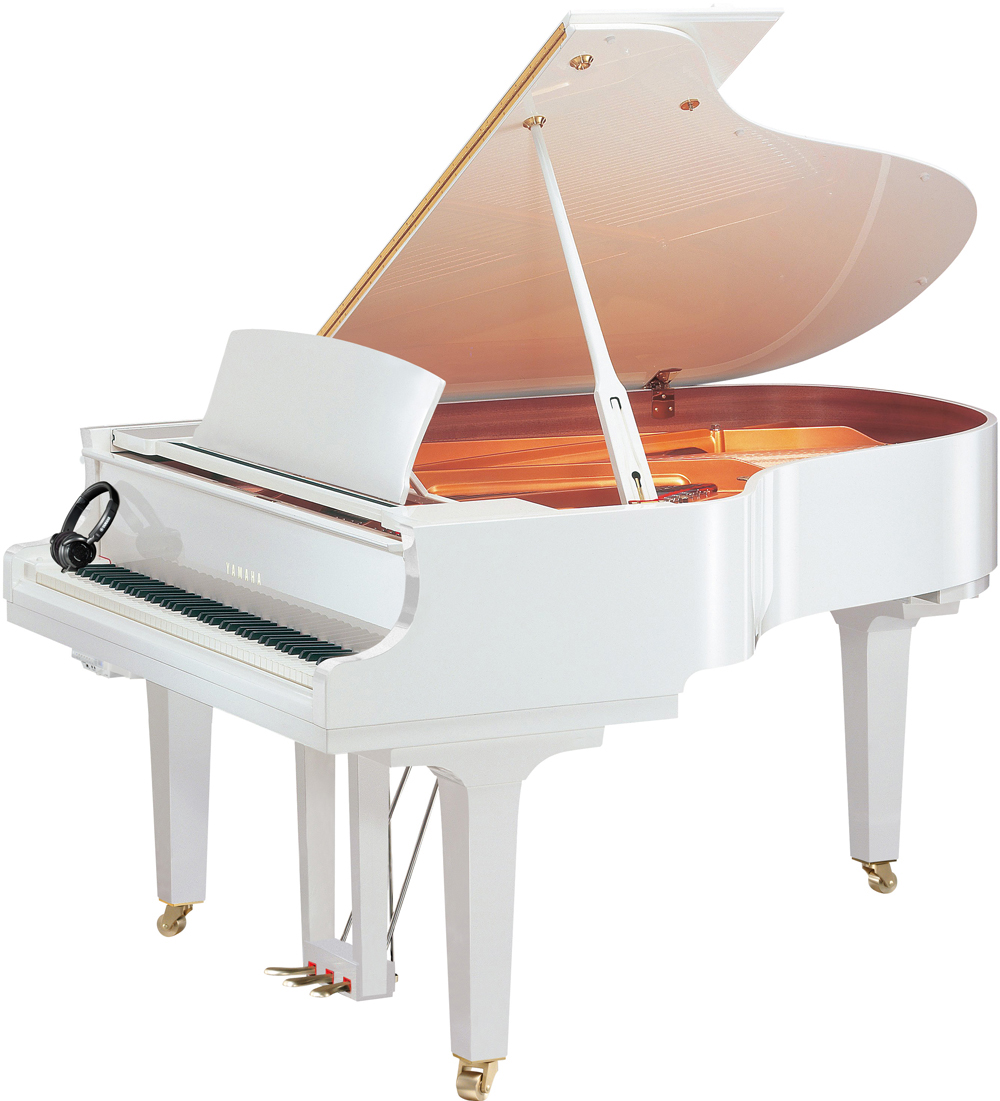
Yamaha's C3X piano with SH system
With these, or similar tools to play with, also offered by other makes, no wonder many people who buy a silent piano have upgraded from a digital instrument. Now, thanks to their silent piano they can enjoy the best of both worlds: the convenience and versatility of a digital piano combined with the feel of an acoustic instrument but with the option to hear it naturally, something that becomes appealing the more musically discriminating and the more proficient at the piano they become. Oh and although in acoustic mode the piano may occasionally be out of tune, in silent mode it never is.
Factory or dealer-fit system?
Silent systems can be bought already fitted to a new piano at the factory or, later, to a dealer’s stock piano or purchased for an existing instrument and fitted by the supplier at their premises or even at the customer’s home (prices for aftermarket systems start from around £1000).
Manufacturers offering silent systems pre-installed in their pianos include Yamaha, Kawai (it calls its silent range of grand and upright pianos, AnyTime), Schimmel (TwinTone), Bechstein (Vario), W. Hoffmann (Vario) and Bösendorfer (Silent Edition). The advantages of such systems include convenience, since the system doesn’t have to be ordered separately, and the fact that allowances have been made for its integration at the piano’s build stage. Most importantly, you can hear the silent system in action. The truth is, there are wide variations in performance between brands: in the digital piano sound and in the system’s sensitivity and how well it is integrated with the instrument.
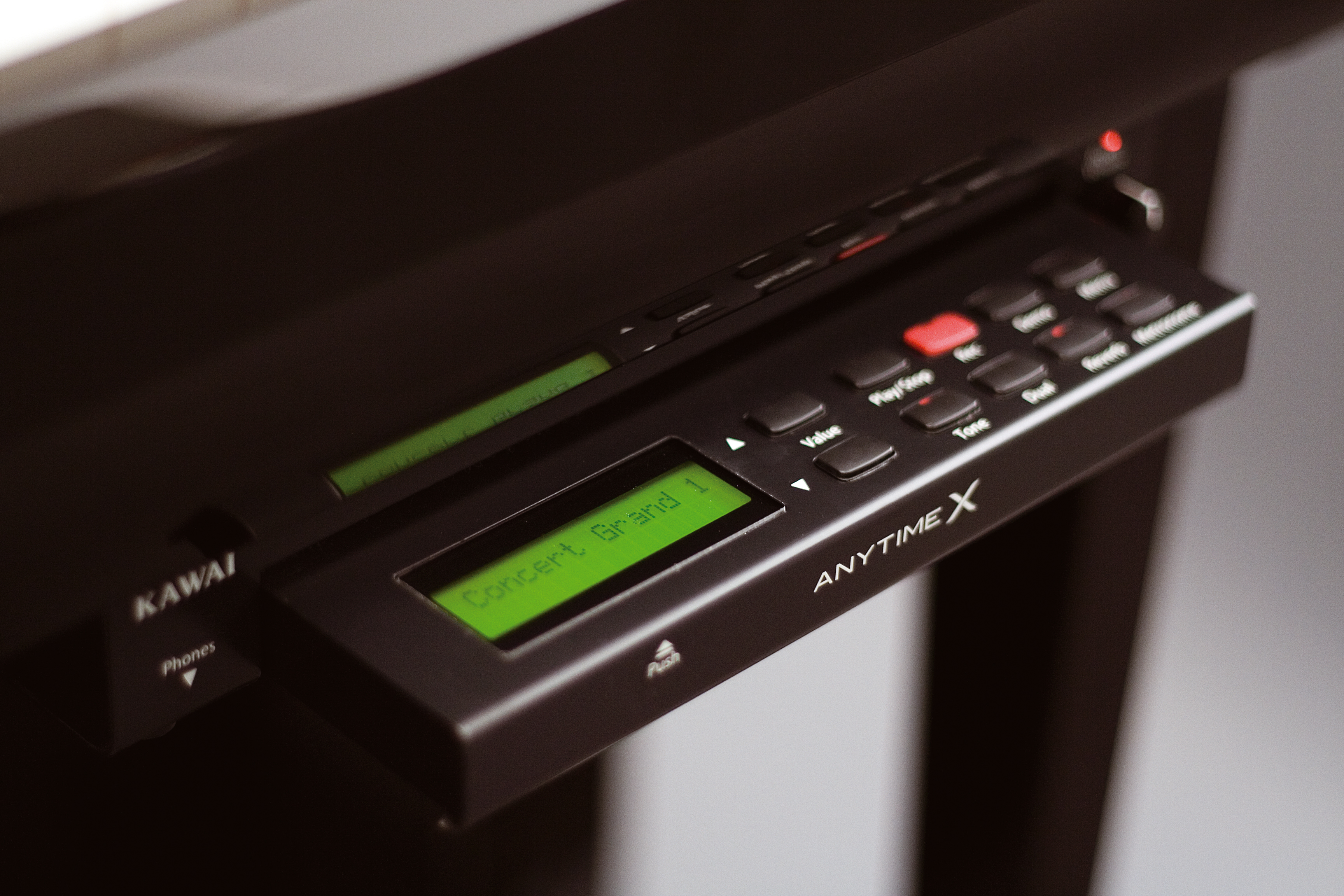
Kawai Anytime X panel
Blüthner can supply a system pre-installed at its factory or alternatively it can be fitted to a piano in stock with a dealer. The system it uses is made by AdSilent, an independent company. Steinway dealers also offer the Adsilent system on their stock or showroom pianos – Steinway itself doesn’t offer it or any silent system as a factory-fit. The advantage of Steinway’s and Blüthner’s solution is that it is possible to try a variety of pianos in their pure acoustic form before settling on one and then having the system fitted to it.
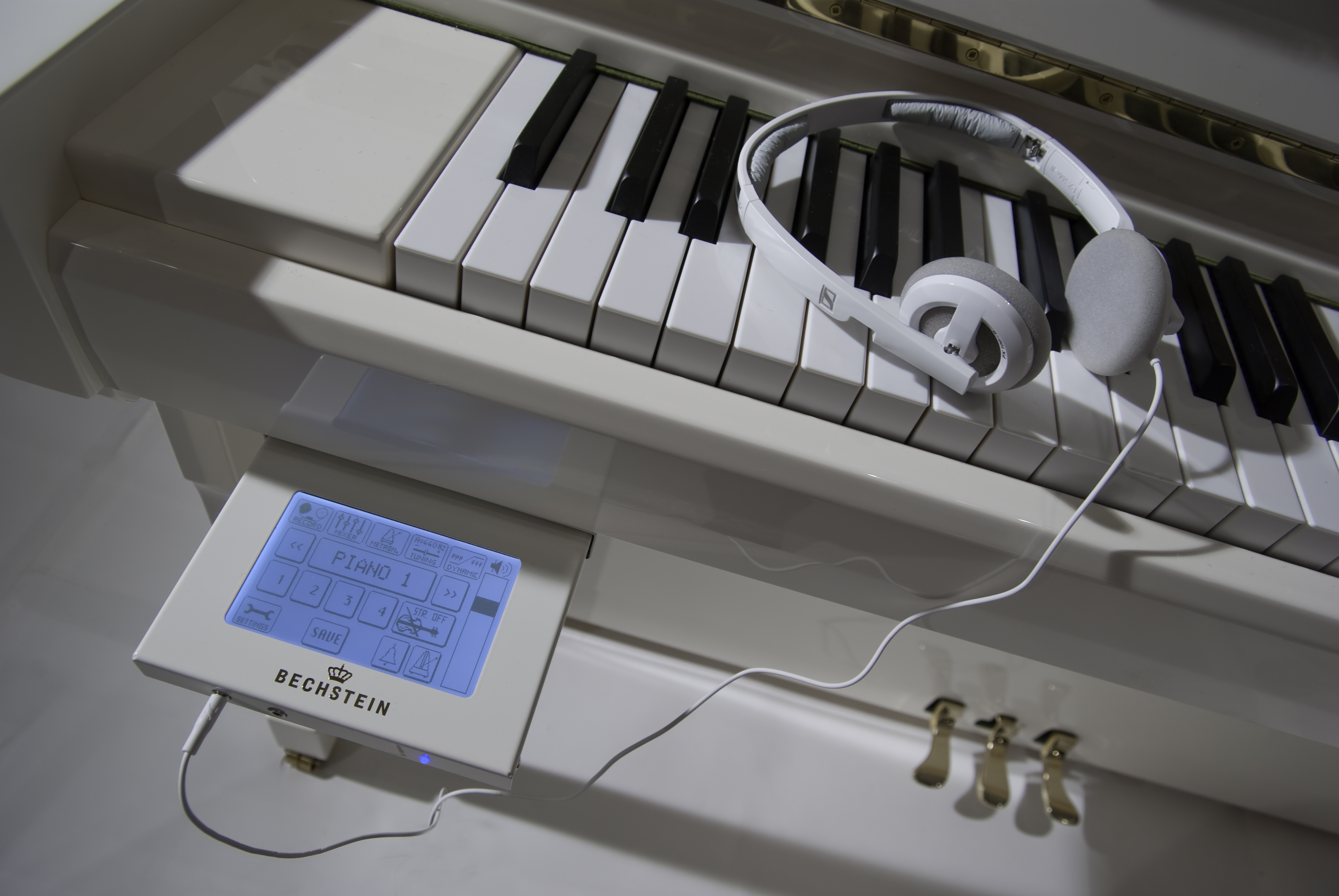
Bechstein's Vario
Other aftermarket silent systems include PianoDisc (the company calls its system Quiet Time), Genio, Kioshi and Gabor. These and other systems can give an acoustic piano a new lease of life and are obviously cheaper than replacing it. A leading supplier and installer of the Adsilent system is Mark Goodwin Pianos. He says his firm has sold hundreds and found them to be very reliable with a reset (turning it off and on) the solution for any issues that may crop up. Being sensor-based, the systems have few moving parts so require no adjustment. A common criticism of silent systems is that the key action may feel different, as Mark explains, ‘The hammers have to be positioned slightly further back from the strings than is optimal so yes, there is a theoretical difference but we keep trying to find a pianist that can feel it but so far without success!’
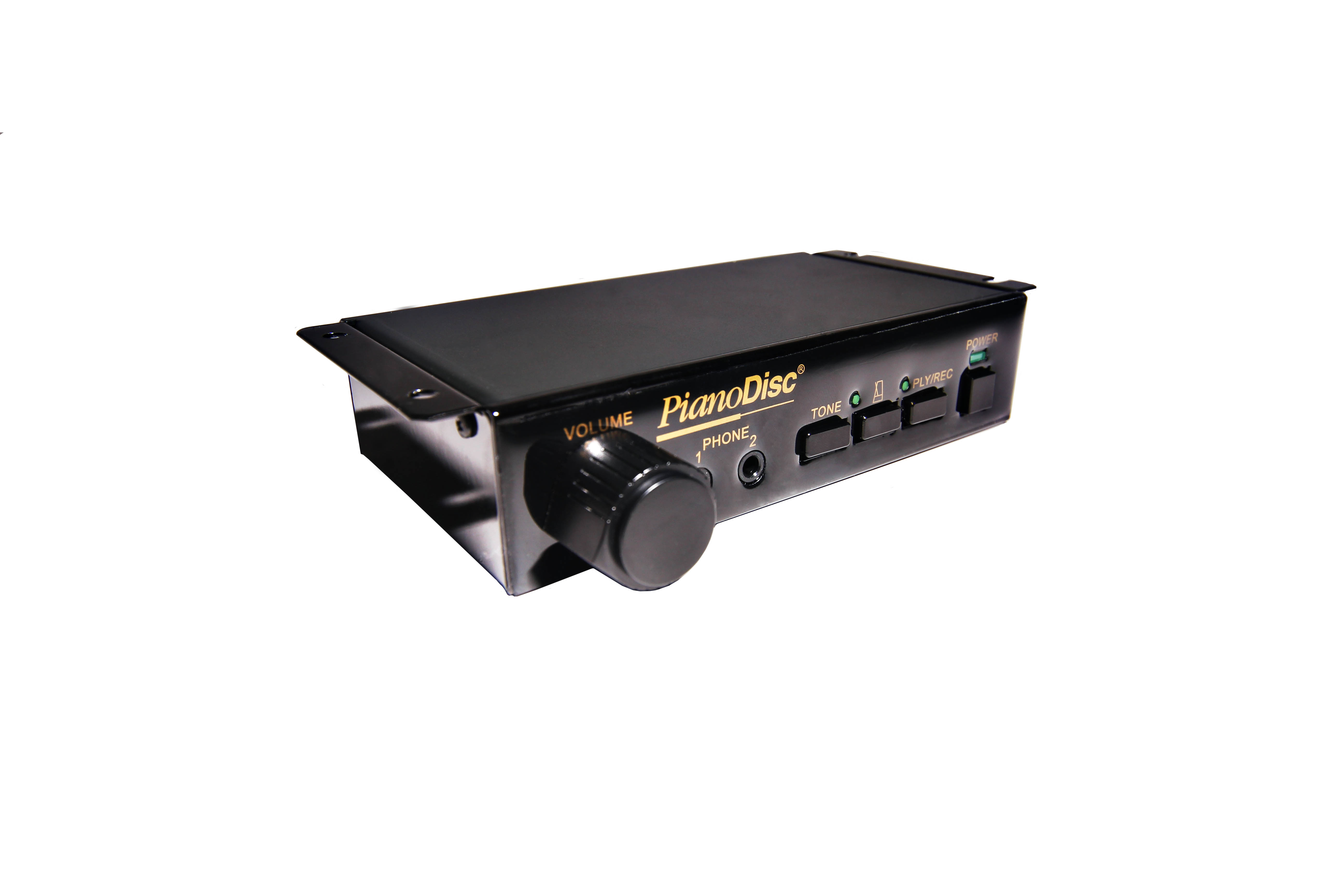
PianoDisc
How does a silent system work?
It’s generally agreed that Gabor Bartos, a Hungarian piano tuner and technician, was the first person to design a system combining all the elements of a true silent piano – a device to stop the hammers from striking the strings, another to read the key speed, sustain duration and pedal action, and a sound module capable of processing the data and producing a credible piano sound through headphones. Bartos then made his system small enough to fit inside a piano. He launched it in the late 1980s with the brand name Gabor. Since that time, rival manufacturers have entered the market, while processing power, sensor capability and design and innovations including MIDI connectivity have raised the performance and potential of silent systems to new heights. It’s even possible to adjust key sensitivity and reverb, as well as choose between different voices or types of instruments.
Progress like this is all very well but where does it leave the person who bought a piano some years ago with what we’d now regard as an outdated silent system? It’s certainly not something owners of acoustic pianos need worry about. Fortunately, one company has the answer. Yamaha is about to launch an upgrade solution for owners of its older Silent pianos. A spokesperson said, ‘From a technical point of view, it will turn your old Silent piano into a brand-new instrument.’
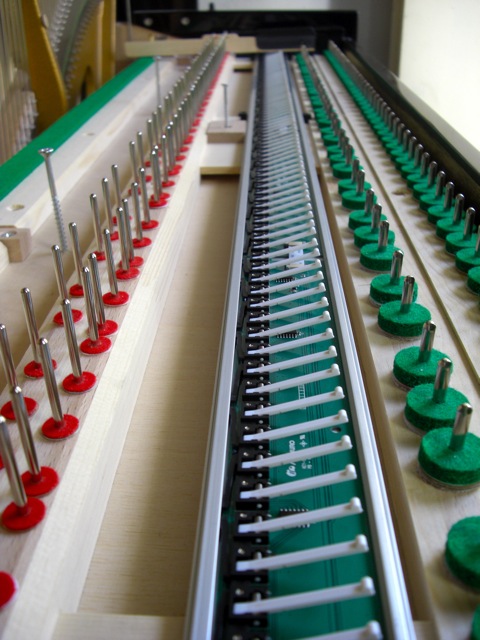
Gabor New Genio Neo System
Away from recent innovations, the basic principles of a silent piano remain largely unchanged. In silent mode, a mute rail or bar stops the hammers from striking the piano’s strings, with activation usually by a foot pedal that locks it in place. The hammer action may need to be adjusted to allow for the presence of the bar and the whole action perfectly regulated so that the sensors below the keys can do their job uniformly. The sustain and sostenuto pedals also have sensors, so continue to work as normally.
Silent systems are usually fitted to upright pianos but can also be fitted to grands. Both may require an adjustment to the let-off (the point when the hammer disengages and flies freely towards the string). Manufacturers have different ways of dealing with this but what matters is how the instrument feels (with some systems, it may be possible to feel a slight change to the action in silent mode). Fitting the typical aftermarket system to a piano usually takes around one day.
A silent system’s ‘polyphony level’ is an important measure. This is the number of notes the system can reproduce simultaneously. A polyphony level of one means that it can only process one note at a time, which is no use to anyone. Instead, a silent system needs to be capable of at least 247-note polyphony. The pianist won’t play 247 notes simultaneously but a good silent system needs to be able to sample as many notes as possible while the piano is being played in order to produce a natural and immersive sound.
What are silent pianos like to play?
We tried two silent upright pianos: a Yamaha b1 SC3 Silent costing £5250 and a slightly larger Kawai K200-ATX4 Anytime costing £6499. Each had full connectivity and multiple voices. Typical of silent pianos they looked no different from traditional uprights save for the presence of a small control panel on the underside of their keyboards; the Kawai’s a little more set back and discreet. Both featured USB, MIDI and record and playback sockets, and a volume control.
To begin, we played them in ‘acoustic mode’. Naturally, the Kawai had a slightly fuller tone but its action felt looser than the Yamaha’s. Activating their silent systems was achieved by pressing down the centre pedal and moving it sideways to lock the mute bar in place. Crucially, on both pianos the fact that the hammers were no longer hitting the strings made no difference to how their actions felt.
What was different was their sound, now coming through the headphones. Playing a budget piano but hearing a full-bodied grand is at first a bizarre but then a rather thrilling experience; especially so when the piano’s keys feel and respond like those of an acoustic instrument. The touch sensitivity of both pianos was extremely impressive, with the result that it was easy to forget the sound was being generated digitally; the hallmark of a good silent piano.
The Kawai impressed us with its full-bodied grand piano tone (the sample instrument is the manufacturer’s top-flight Shigeru concert grand). It was just possible to hear the keys touching the key bed, too; very authentic. After a time, the sound possibly felt a little overwhelming and seemed at odds with the instrument’s compact size and looser touch. The Yamaha b3 sounded less tempting on first hearing, but after a while its more focused and balanced grand piano tone, in combination with the piano’s more precise action, won us over. It’s all a matter of taste, of course, as the sound and touch of a piano is so very personal.
Conclusion
Whether your preference is for Yamaha, a Kawai or any other make, thanks to a silent piano’s close relationship to its acoustic cousin, any example with a well-integrated and sensitive system and with a pleasing grand piano sound is likely to be an inspiring instrument to play. That it can also be played in acoustic mode and at any time of the day or night makes the case for owning a quality, silent piano almost unarguable.
This article appears inside the 2026 Piano Buyer's Guide.
You'll find lots more articles included, as well as pages of listings – from affordable digitals to limited-edition grands.