

07 April 2026
|
Paul Wittgenstein lost his right arm in the First World War – a tragedy that led him to commission some of the greatest piano music for the left hand. Here we look at the left-hand repertoire and its players.
Piano music composed for the left hand alone remains something of a rarity in the concert hall, even though many pianists and discerning audience members are familiar with works such the Ravel Concerto for the Left Hand, the Godowsky Chopin arrangements and the Brahms left-hand setting of the Bach Chaconne. It’s a shame, because the left-hand repertoire is large, diverse, and can be utterly enthralling. Happily, this state of affairs may well be changing, thanks to several determined pianists who are championing this repertoire, none more avidly than the British pianist Nicholas McCarthy.
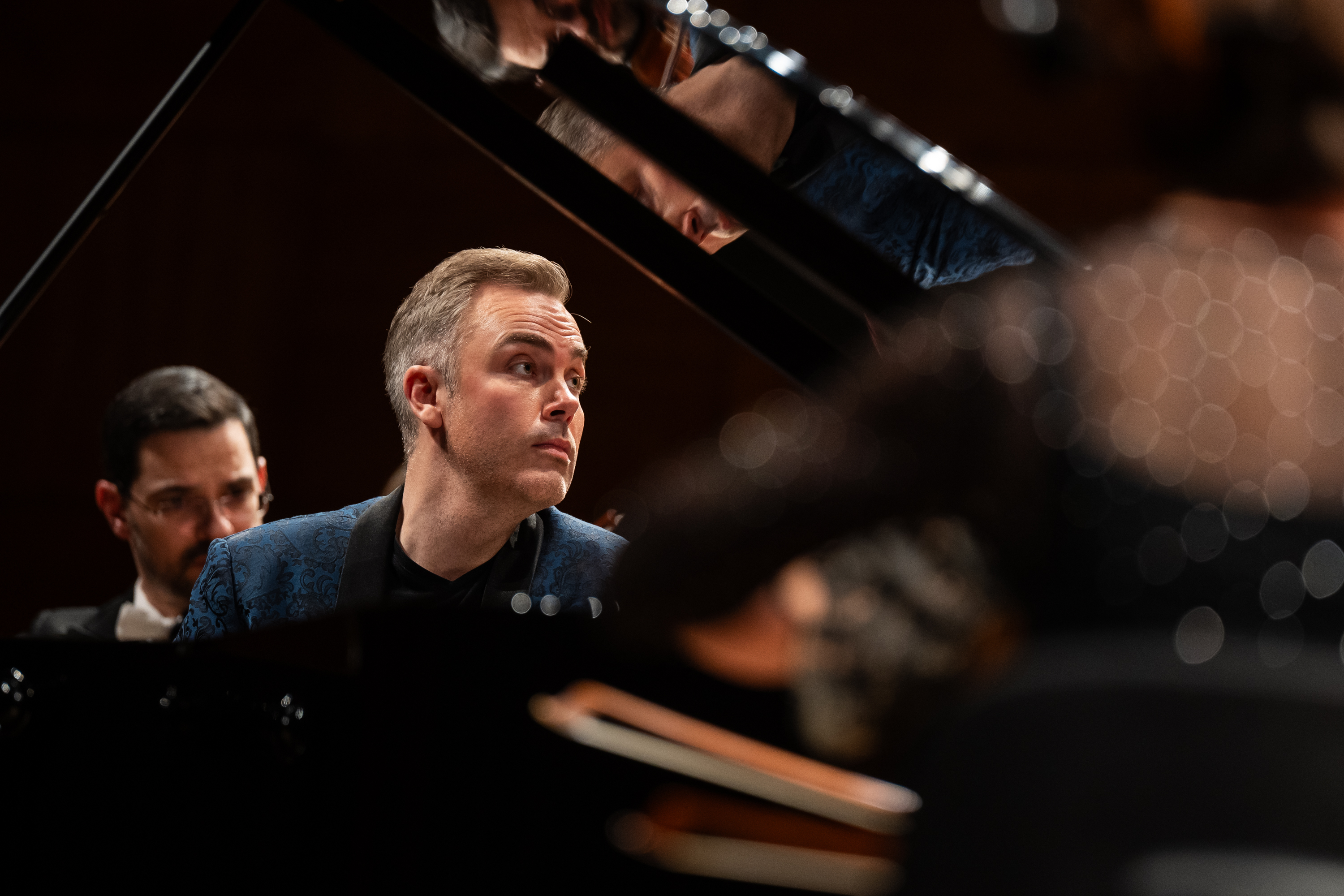
Nicholas McCarthy
In 2012 McCarthy became the first left-hand alone pianist to graduate from the Royal College of Music. Born in 1989 with a complete left arm and hand, but a foreshortened right arm, McCarthy was 14 when he had a piano epiphany after hearing a friend play the first movement of Beethoven’s ‘Waldstein’ Sonata. ‘I became piano obsessed!’ laughs McCarthy. ‘Quite naively, I said to my parents that I wanted to be a concert pianist.’ His non-musical parents supported his ambition, providing him with a small digital keyboard, all the while assuming it would only be a passing fad.
But McCarthy was soon spending hours on the keyboard. ‘I found I could play the tune with my little arm [the right]. The Mozart C major sonata was good because the left hand is an Alberti bass and the right hand has the melody.'
It was two years into his study before McCarthy turned to the left-hand repertoire, thanks to the ‘inevitable knock-back’, when he was denied a place at a specialist music school due to a head’s scepticism about his ability to play scales. Later McCarthy was accepted at the Junior Department of the Guildhall School on the condition that he specialise in left-hand repertoire.
In his life as a one-handed concert pianist, McCarthy has some illustrious predecessors, most notably the Austrian pianist Paul Wittgenstein (1887-1961), who lost his right arm in the First World War but continued as a left-hand player, commissioning pieces from some of the greatest composers of his time. ‘Without Paul Wittgenstein, I wouldn’t have much of a career,’ says McCarthy. ‘Britten, Strauss, Ravel, wouldn’t have composed that music.’
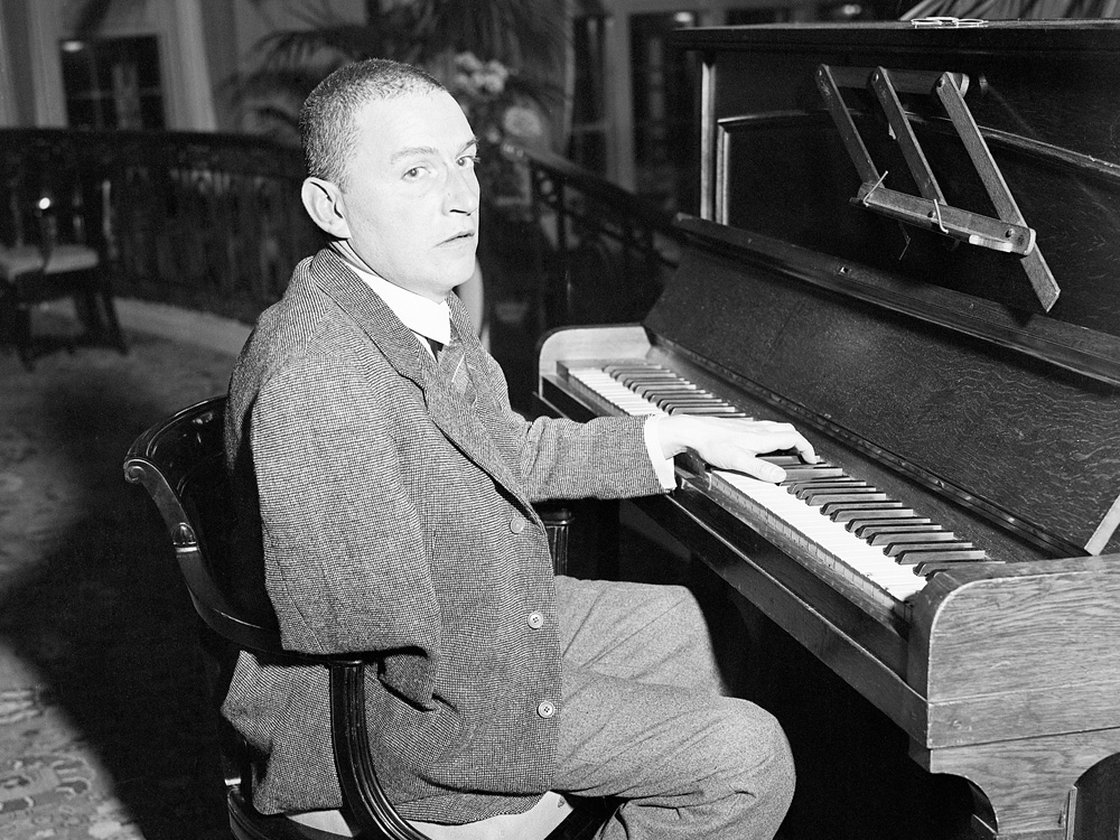
Paul Wittgenstein commissioned left-hand pieces by Ravel, Britten and more
Paul Wittgenstein was born into an extremely wealthy and deeply eccentric Viennese family (revealed in all its gossipy glory in Alexander Waugh’s The House of Wittgenstein: A Family at War). Even more than his musically knowledgeable and quarrelsome siblings (who included the famed philosopher Ludwig), Paul was entranced with music and studied with a noted teacher, Theodor Leschetitzky. After a slow-burning career, he made his public concert hall debut in Vienna in 1913, age 26, playing four concertos in a row.
The following August, in the opening month of the First World War, he was serving as an Austrian officer in Poland when his right arm was shattered by a bullet and had to be removed. After enduring terrible deprivations as a prisoner of war, Wittgenstein made his way back to Vienna, determined to continue as a concert artist.
He took inspiration from the one-armed pianist Count Géza Zichy, the composer Joseph Labor (the first to write a left-hand piece for him) and Leopold Godowsky, a pianist-composer whose Chopin Etudes for the Left Hand are cornerstones of the repertoire. The rebuilding of his technique went slowly. ‘It was like trying to climb a mountain, if I could not reach the summit by one route I would climb down and start again from the other side,’ he said. Three years almost to the day of his first public concert, Wittgenstein made his one-handed debut in a programme including Labor’s now-rarely performed Konzertstück and several Chopin/Godowsky etudes.
Wittgenstein began a search in earnest for the left-hand music, scouring ‘the antiquarian music stores of Paris, Vienna, Berlin and London,’ writes Waugh. His finds included original works by Scriabin, Dryschock, Saint-Saëns and Alkan. He made his own arrangements of Mendelssohn, Liszt, Wagner and Mozart, but it was soon obvious that what was needed was more original music. Wittgenstein was uniquely placed to become the initiator of this new repertoire: he had the knowledge, connections and financial resources. The long list of his commissioned works include Ravel’s Concerto for the Left Hand, Strauss’s Parergon and Panathenäenzug, Hindemith’s Piano Music with Orchestra, Korngold’s Piano Concerto and Britten’s Diversions.
Watch Chenyin Li play Frank Bridge's At Dawn, written for the left hand
Many of the resulting pieces show admirable effort by the composers to deal with the acoustical challenge of one hand on a piano playing again an orchestra. But Wittgenstein was a tricky customer. He re-wrote his own part and the orchestral parts in many of his commissions, or, in the case of the Hindemith and Prokofiev, never played them (the Hindemith was locked away and only received its first performance in 2004, by Leon Fleisher and the Berlin Philharmonic).
Wittgenstein’s tussles with Ravel were ferocious after he tried to make alterations to the concerto score. In 1932, Wittgenstein wrote to Ravel, ‘As for a formal commitment to play your work henceforth strictly as written, that is completely out of the question. No self-respecting artist could accept such a condition. All pianists make modifications, large or small, in each concerto they play.’
Prokofiev’s accompanying note to Wittgenstein along with the Fourth Concerto included this: ‘I have tried to make it as straightforward as possible; you, for your part, must not judge too quickly, and if certain passages seem at first indigestible, do not rush to judgement, but wait a while. If you have any suggestions of improving the work, please do not hesitate to tell me them.’ Wittgenstein never performed the concerto.
Wittgenstein gave the premiere of Britten’s Diversions in 1942, but not without a similar scuffle with its composer. Britten wrote in a letter to a publisher, ‘I’m having a slight altercation with Herr von Wittgenstein over my scoring – if there is anything I know about, it is scoring so I am fighting back. The man really is an old sour puss.’
Given this background, McCarthy admits to having a ‘love-hate relationship’ with Wittgenstein. ‘The fact that he had wealth behind him meant he could get repertoire of pieces that people will play. For me it’s a fine line with Paul Wittgenstein. I feel I’m in his debt, yet I could throttle him for things he did, like keeping the Hindemith score hidden away.’
Originals and arrangements
Some pianists come to the left-hand repertoire out of necessity, such as McCarthy and Wittgenstein, and those suffering a right-hand injury, such as Leon Fleisher, Gary Graffman and Menuhin collaborator Paul Coker. Two-handed pianists often come to it out of curiosity. One pianist in the latter category is Ivan Ilić, who recorded an album of the Godowsky Chopin Etudes.
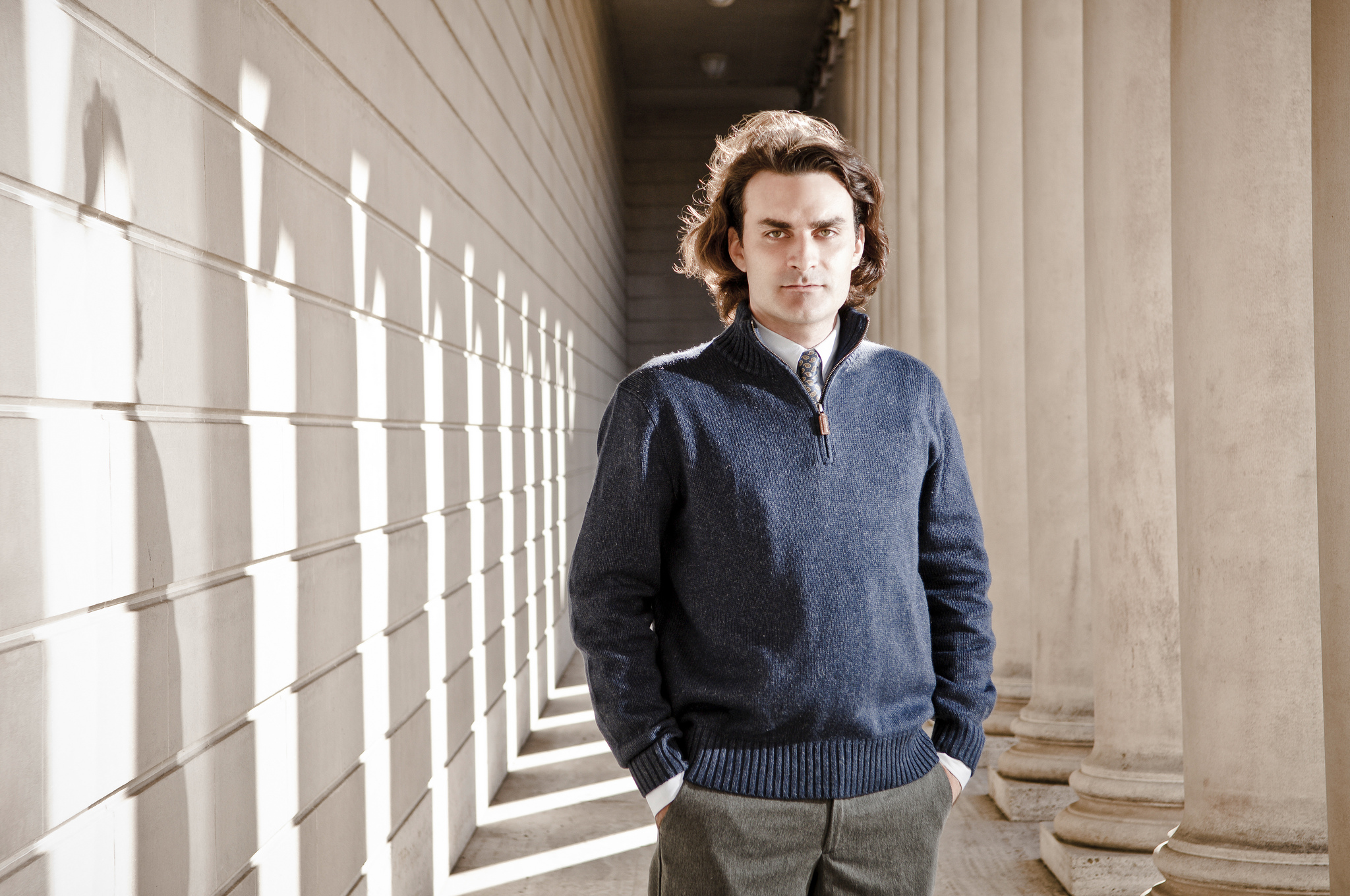
Ivan Ilić (© DH Kong)
Ilić came to left-hand music in an indirect way, via a teenaged ‘obsession with Nathan Milstein’s recording of the Bach Sonatas and Partitas for solo violin.’ Once his second cassette of the recording was worn out, he says, ‘I learned the Brahms transcription as a way of getting deeper into the music. I was surprised, a few years later, when I finally saw the original violin score: Brahms had changed very little. He brought Bach’s original work down an octave, and, most important, he came up with a few ingenious ideas to fake the difficult violin passagework. In those tricky passages Brahms manages to imitate both the sound and the physical gestures of the original violin Chaconne, a remarkable achievement.’
So how much music is there for left hand alone, including both original works and arrangements and transcriptions? ‘I have only covered a third of repertoire,’ says McCarthy, who spent much time at the RCM researching it. (Two good sources of left-hand repertoire are Theodore Edel’s Piano Music for One Hand, which lists over 1,000 works, and Donald L Patterson’s One Handed: A Guide to Piano Music for the Left Hand.)
I ask McCarthy and Ilić to name some of their top pieces. ‘My favourite piece, which I’ve played in every single concert, is the Scriabin Nocturne,’ says McCarthy. ‘Ravel studied this score when writing his concerto. Scriabin is an absolute master of writing for left hand.’
‘For me, the greatest solo left-hand music is Godowsky’s set of 22 Chopin Studies, which are essentially variations on 22 of Chopin’s 27 Etudes (opus 10, 25, and the posthumous set),’ says Ilić. ‘For pianists and music lovers who know Chopin’s études intimately, the Godowsky Chopin Studies can be rather disconcerting at first. Your expectations are constantly thwarted by Godowsky’s quirky harmonic additions. It’s like returning to a small town where you grew up after a 20-year absence; you recognise everything, but at the same time everything has changed.’
McCarthy also cites Frank Bridge’s Three Improvisations for the Left Hand (the first movement, ‘At Dawn’, is performed by Chenyin Li above). Bridge wrote the piece in 1919 for his student and friend, Douglas Fox, who lost his arm in the First World War. Then there are Moszkowski’s 12 Etudes for the Left Hand. ‘It’s quite standard Romantic writing,’ says McCarthy. ‘He realised importance of developing the left-hand repertoire.’ Saint-Saëns wrote Six Left Hand Etudes, which are intermediate level and in a neo-classical style. ‘They’re lovely,’ says McCarthy.
When it comes to the concertos, Ilić is a big fan of the Prokofiev Concerto No 4. ‘Prokofiev takes the opposite approach to Ravel; he doesn’t shy from blending the one hand of the piano with the orchestra. The Fourth Concerto is an exciting, high-adrenalin affair for everyone involved; the first and fourth movements are electrifying.’
‘I really enjoyed performed Britten’s Diversion,’ says McCarthy. ‘It’s 25 minutes long and it goes by so quickly. It suits my technique; there are lots of fast octaves.’
Technical matters
A different technique is required to play the left-handed piano repertoire. First and foremost, says McCarthy, ‘the pedal is key. As a left-handed pianist, I’m creating the illusion of two hands playing. You pedal more than you would otherwise.’ He also positions himself an octave higher than the usual ‘belly button to middle C’ spot. ‘I feel there is a difference between someone playing left-hand repertoire who has two hands vs Paul Wittgenstein and me. You can almost hear when someone is playing from necessity instead of choice.’ One reason might be that two-handed players can grip the stool with their right hand as they play with their left. Not being able to do that has made McCarthy very particular about his choice of stools. ‘In my second year at the RCM, there was a technical exam and the stool was like a rocking horse. I was going so fast in the Godowsky that I had to stop and get a new stool!’
Ilić lists some of the reasons that two-handed players might want to explore this music: ‘It will certainly make your left hand more agile, it will make you more aware of the different registers of the piano, your pedalling will improve, your left hand will become more expressive, and your two-handed sound will become more rich, because you will develop a more attentive way of listening to the bass. But the best reason is that the music itself is wonderful,’ he adds. ‘You can certainly play the Bach-Brahms Chaconne with two hands if you like, but it’s a lot more fun to try to play it the way Brahms intended!’
McCarthy has something of a missionary’s zeal: ‘I’ve been waking people up to repertoire. Sixty per cent of my audience are people who’ve seen me on the telly, but after one of my recitals, they are more knowledgeable about left-hand repertoire than the critics. I give them stories before I play because there is quite an interesting story behind many of the pieces.’
Consider also that playing a piece for one hand alone has a certain audience appeal. ‘Left-hand music is a fantastic way to introduce visual contrast into any programme, an aspect that is so obvious that it’s little discussed. When you play a piece with one hand, the audience immediately becomes curious and engaged. There is a buzz, you can feel it.’ It’s a buzz that is definitely getting louder in concert halls everywhere, thanks to the likes of McCarthy and Ilić.
MORE LEFT-HAND PIECES TO TRY
Scriabin Prelude Op 9: Tinged with a kind of Chekhovian nostalgia and melancholy, this is a lovely piece that deserves its fame. Technically, it’s not very difficult, and you can listen to many different versions online.
Saint-Saëns Bourrée, No 4 from Six Etudes for the Left Hand op 135: It has a delightful rhythmic lilt to it, and he does so much with so few notes. Those who like Bach will love it, and it’s short enough to not be too intimidating.
Godowsky Meditation: A sensual, romantic piece that’s almost never played. It’s less than four minutes long, and the tempo is on the slow side. The difficulty is in trying to sort out the different layers of sound, which is typical of Godowsky’s music.
This article appeared inside a past issue of Pianist.
Listen to Nicholas McCarthy talk to Pianist editor Erica Worth on the Pianist Podcast.