





Lovers of vinyl will be delighted to hear that Burkard Schliessmann’s recent Schumann Fantasies album has been released as a Special Edition. John Evans catches up with the pianist to find out more
Are you passionate about vinyl?
In an age of digital streams and compressed audio files, the vinyl LP stands as a monument to sensuality and authenticity. Anyone who has ever placed the stylus upon an LP knows the music really breathes! The sound is warm, organic and full of character. Analogue playback reveals nuances that digital formats often smooth over, so that one does not simply hear the music but feels it.
The format itself is a feast for the senses: the reassuring weight of a 180-gram pressing promises quality, the large-format cover invites admiration and the act of playing a record becomes a meditative ceremony. For those who wish not merely to hear music but to experience it, an LP is an indispensable treasure.
What fresh qualities does vinyl bring to your recording of Schumann's music?
The original SACD release was a triumph of modern recording. Captured at Berlin’s legendary Teldex Studio with a 14-microphone array, the album enveloped listeners in a multidimensional soundscape. The Atmos mix added spatial immersion, placing the listener inside the piano’s resonance as if Schumann’s dreams were unfolding in real time. However, vinyl offers something different, something elemental.
The analogue format brings a warmth and intimacy that digital precision can’t replicate. The piano’s lower registers bloom with a fuller, more tactile resonance while the upper voices shimmer with a softness that feels almost whispered. There’s a sense of immediacy and of presence. For me, this isn’t just about sound – it’s about philosophy. Music must breathe. It must speak to the soul and not just to the ear. Vinyl, with its ritualistic charm – the lifting of the tonearm, the gentle drop of the stylus, the slow spin of the platter – invites listeners into a slower, more reflective engagement with the music. It’s a format that demands attention and rewards it with emotional depth.
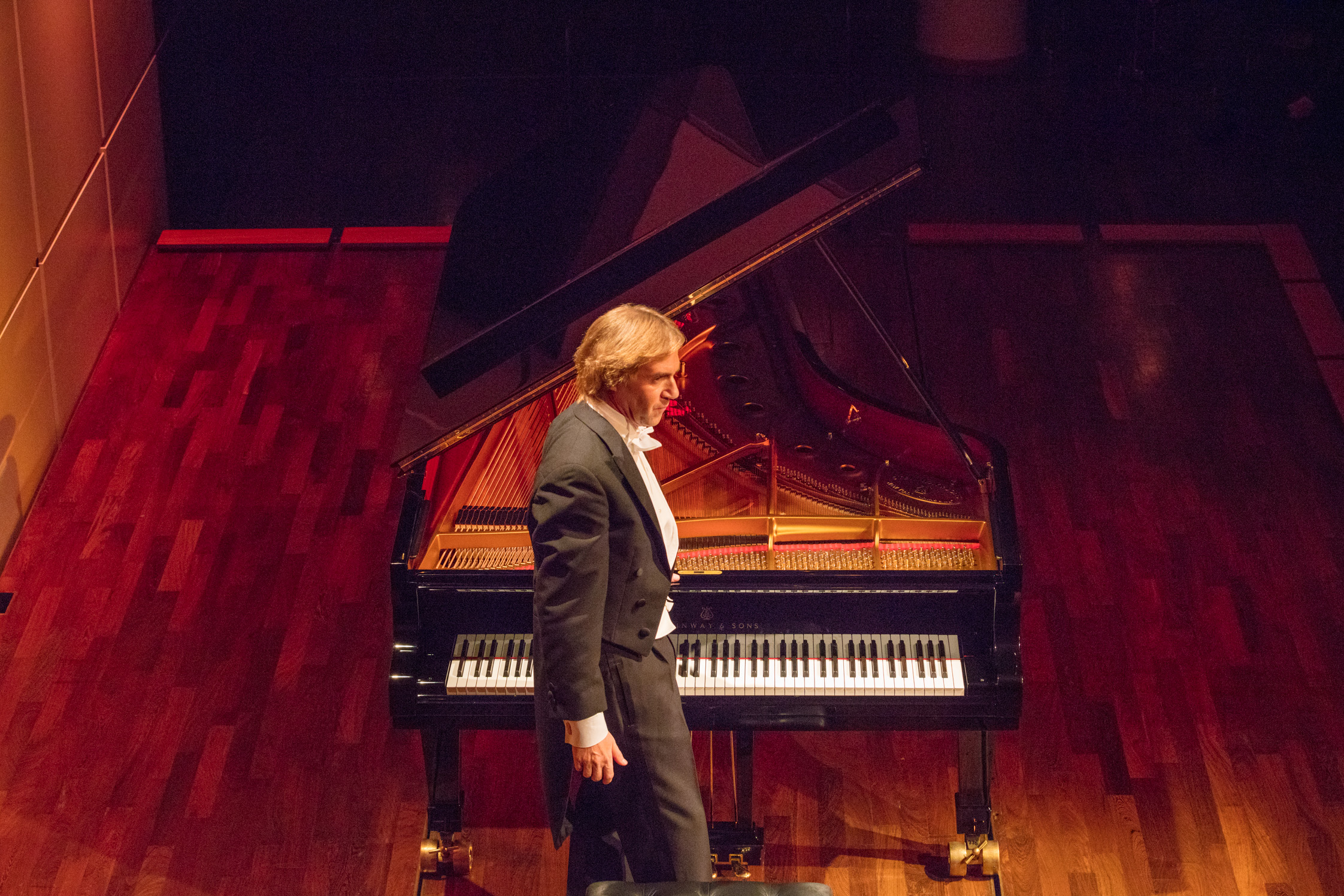
Burkard Schliessmann on stage at the Alter Oper, Frankfurt
Can you describe the contents of this new release?
Housed in a gatefold sleeve with gold-foil embossing and archival artwork, the edition includes extensive liner notes, artist reflections and high-resolution photography from the recording sessions. It’s a collector’s item but more importantly, it’s a vessel for Schumann’s spirit. At a time when music is often reduced to background noise, Robert Schumann: Fantasies on vinyl is a bold statement; one that says great art deserves a great medium.
Explain the meaning of 'special triple heavyweight gold vinyl'?
The album spans three, full-length records, allowing for generous groove spacing and optimal dynamics. This means less compression, more breathing room and a more natural, expansive soundstage. Each disc is pressed on audiophile-grade vinyl, typically weighing 180 grams or more. This added mass ensures greater stability during playback, reducing resonance and minimising warping over time. Beyond its visual splendour, gold-coloured vinyl is often reserved for limited, commemorative editions. It signals rarity, prestige and a collector’s edge.
What did the transference to vinyl involve?
Moving from SACD and Dolby Atmos to heavyweight gold vinyl required more than technical adaptation; it demanded a rethinking of how Schumann’s emotional landscapes could be etched into analogue grooves. The process began with the original high-resolution masters. Already engineered for spatial clarity and dynamic range they had to be remastered specifically for vinyl, a medium that responds differently to frequency, phase and stereo imaging.
Crucial to this stage of the process was Packaged Sounds Group, a UK-based vinyl manufacturer renowned for its audiophile-grade pressings. Using custom lathes and diamond styluses, the lacquer masters were cut with extreme care to preserve the full breadth of the piano’s resonance. Pressing each disc on 180g audiophile-grade vinyl ensured stability, durability and minimal surface noise. The company also oversaw the creation of the deluxe gatefold sleeve, featuring gold-foil embossing, archival photography and extensive liner notes. The result is a tactile, visual, and sonic artefact.
Why are you drawn to Schumann's music?
My relationship with Schumann dates from my earliest years. I was fascinated by how his music combines abstruse Romanticism with intelligence, philosophy and literature. While Chopin composed mainly for the piano, Schumann composed not only for that instrument but also for voice, for chamber groups and for orchestras. Like many Romantics, he poured his enthusiasms into creating a ‘golden reflection of life’. This creative path led him from Classical forms to the freedom of subjective self-expression. However, although his music must be played in an improvisational style, its internal structures remain classical.
With Schumann, the piano is a tool for conveying poetic monologues in musical terms. The tone-colours of the instrument’s registers are not employed in an orchestral sense as, for example, in Beethoven. Instead, an effective Schumann interpretation relies on dynamic richness and the differentiation between main and secondary voices. A wide variety of touch is required including humorously abrupt accents and elegant staccatos. Hand-spans of up to a tenth are frequently found while at other times, the two hands may move simultaneously over the same groups of notes.
'Music must breathe.
It must speak to the soul
and not just to the ear'
The fact that Schumann rarely uses the top and bottom extremes of the keyboard is one feature of his piano style that significantly differentiates its colour palette from that of Liszt or Chopin. The use of the sustaining pedal over long arcs of sound, especially in lyrical passages, helps the performer to feel Schumann's dreamlike moods, his mysterious sound quality and free-roaming imagination.
My programme shows how Schumann abandoned the large architectural forms of his early years in favour of miniature and more detailed forms in his later ones. This transition can be a challenge for performers. In the pieces I have chosen for Robert Schumann: Fantasies, one can trace this compositional journey in a wide-ranging programme dominated by fantasy, a concept close to Schumann’s heart.
How do you work on a Schumann piece?
Preparing a Schumann score is a journey into the heart of Romanticism; a dialogue with poetry, philosophy and the subconscious. I don’t begin at the keyboard but in the realm of ideas. My approach is rooted in detailed analysis, not only of Schumann’s musical architecture but also of the literary and psychological forces that shaped it. In my extensive liner notes I write of Schumann’s connection to poetry, drawing parallels between its lyrical ambiguity and Schumann’s own phantasmagorical sound world.
This literary grounding is no academic detour – it is essential. For example, in Kreisleriana and the Fantaisie in C, I explore not just tempo and tone but narrative structure. The result is a performance that feels ‘lived-in’ and not merely executed. My understanding of Schumann’s songs and lyrics informs even the instrumental works, lending them a vocal quality and a sense of storytelling that transcends the piano.
Finally, how do you expect this release will be received?
I am hugely excited and perhaps I should let the words of Dr Irmgard Knechtges-Obrecht speak for me. Writing in the Schumann Journal, she said of the release that it is ‘completely new, surprising and unexpected… a MUST!’ I sincerely believe this new, special triple heavyweight gold vinyl release will redefine how Schumann is heard, felt and understood in the 21st century. It is a recording that bridges intellect and emotion, tradition and innovation and which will resonate across borders and generations.
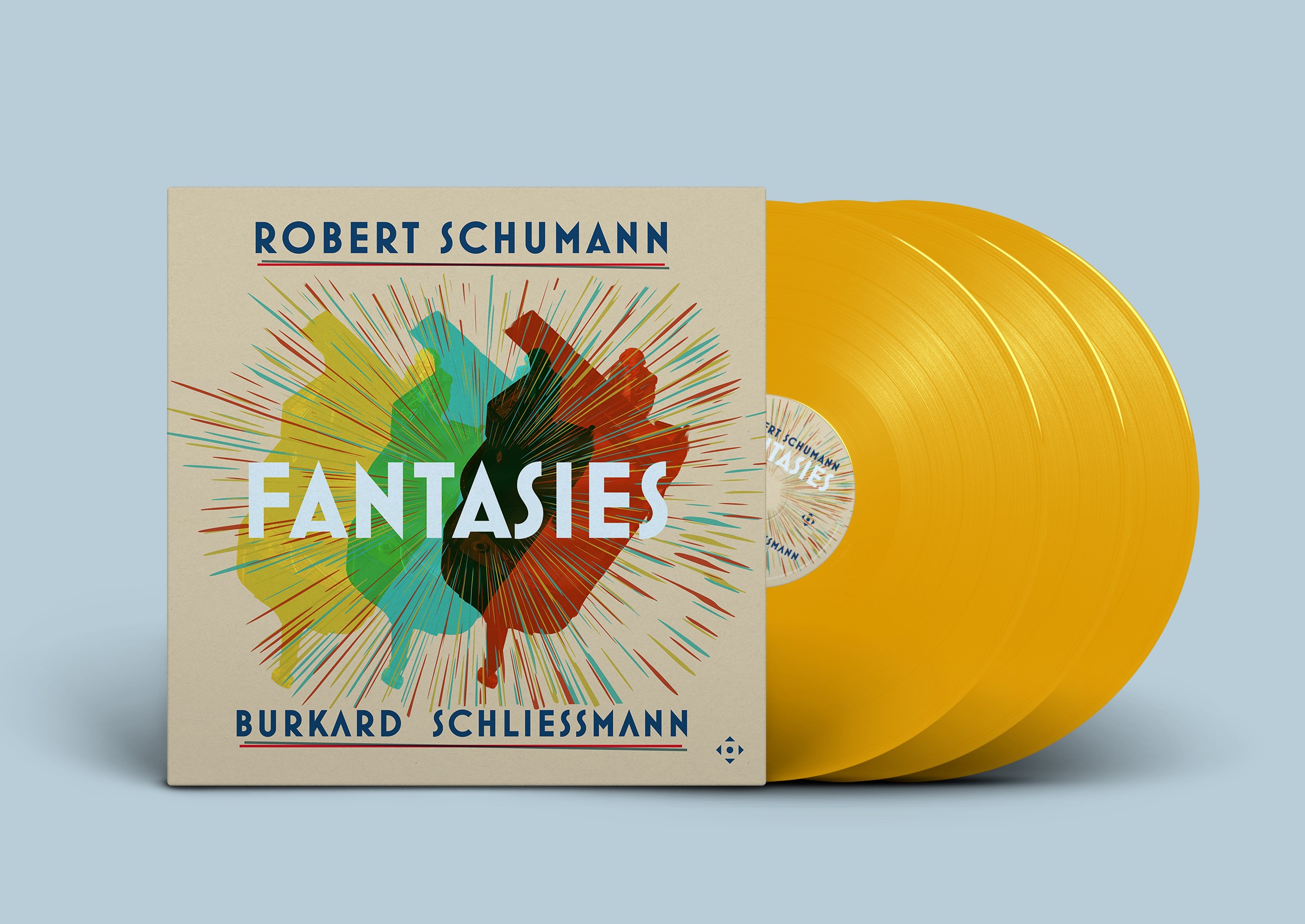
Burkard Schliessmann’s Robert Schumann: Fantasies – Special Triple Heavyweight Gold Vinyl Edition – is on sale now (Divine Art DDL 12404; EAN/UPC: 809730240416)