




24 March 2026
|
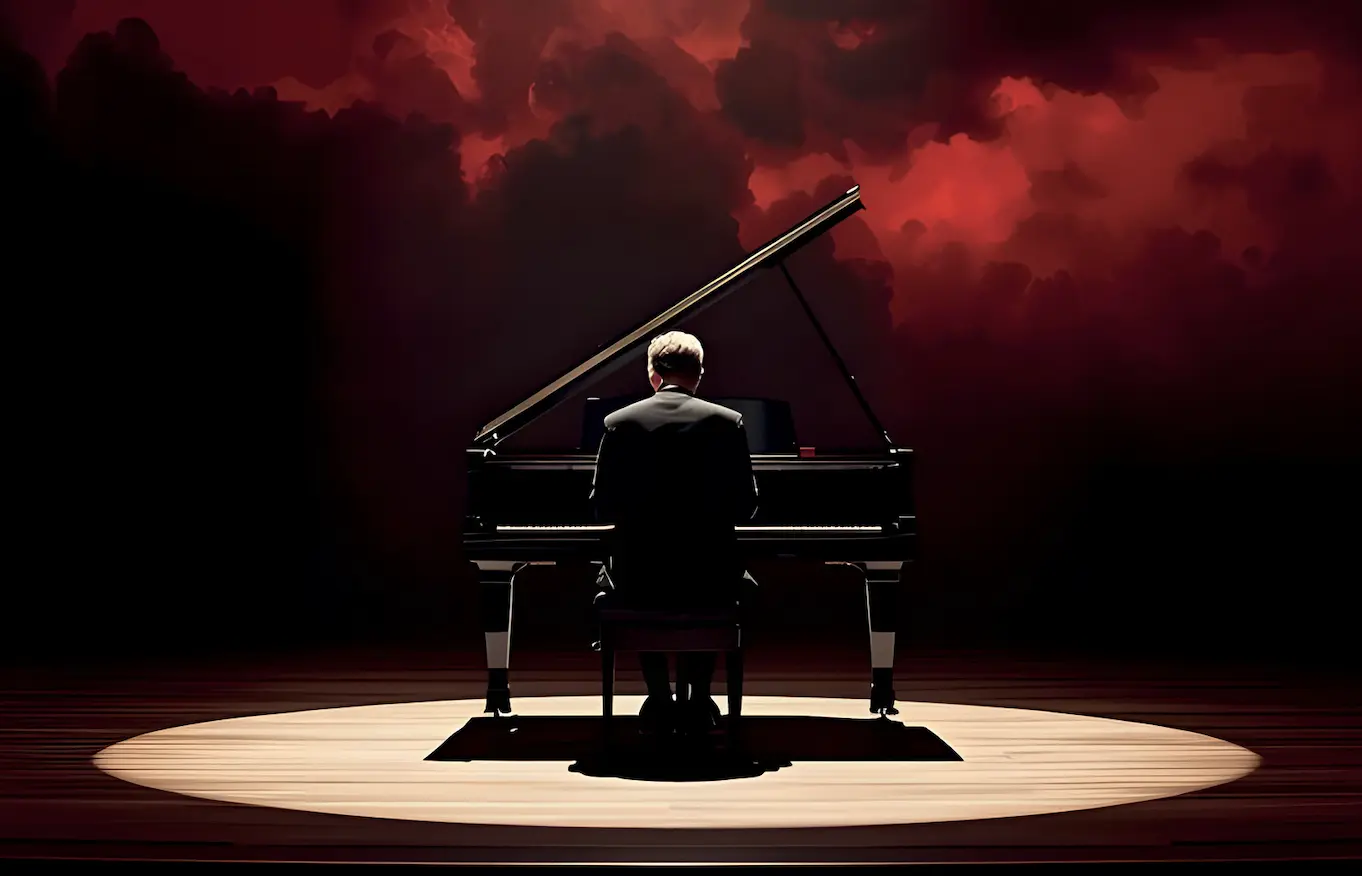
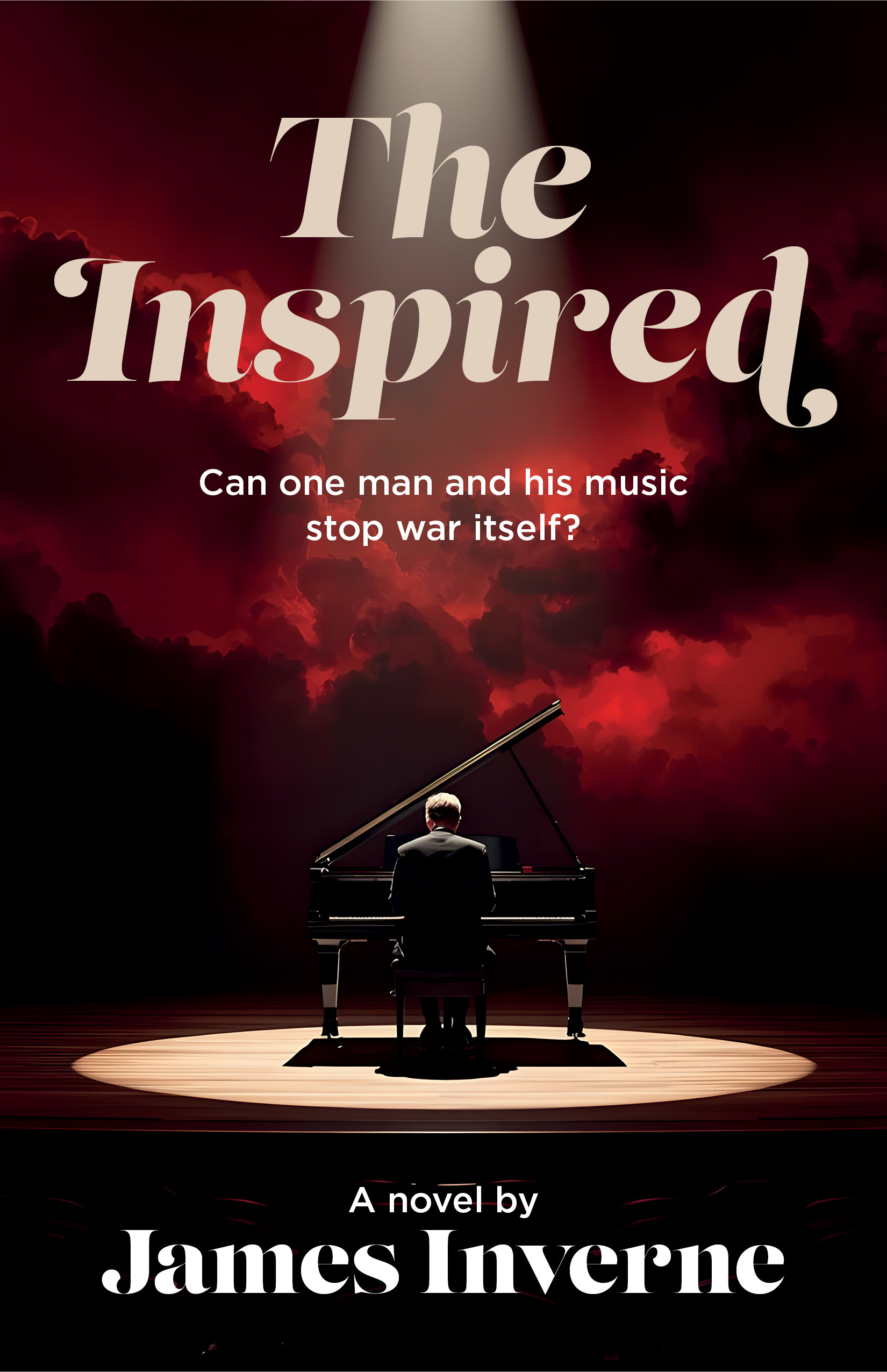
Stretching across nearly 70 years, The Inspired weaves through the connected stories of three pianists – Lillya, Professor Dayan and Van Cliburn – as each is forced to confront their deepest-held beliefs, and a world out of harmony.
Review by Ilona Oltuski
In 1958, amidst the Cold War, 23-year-old Texan Van Cliburn won the inaugural International Tchaikovsky Competition in Moscow. The event was intended to showcase Soviet cultural superiority immediately after Russia launched the first satellite, Sputnik. Considering Cliburn’s brilliant performance, acknowledged by the thunderous applause from the Moscow audience, the competition’s judges, presided over by the renowned Russian composer Dmitri Shostakovich, sought the Kremlin’s approval to award first prize to an American. When Khrushchev asked, ‘Is he the best?’ The answer was yes. ‘Then give him the prize!’ Cliburn returned home to a ticker-tape parade in New York City, the only one ever bestowed on a musician.
The titan from Texas
Van Cliburn’s instant fame led to the start of a remarkable career marked by significant achievements: the first Grammy® for classical music; the first classical album to reach triple platinum; record-breaking ticket sales at iconic venues like Carnegie Hall and Madison Square Garden; and performances for every U.S. President, royalty, and global leaders serving during his lifetime. Time magazine hailed him as ‘The Texan Who Conquered Russia.’
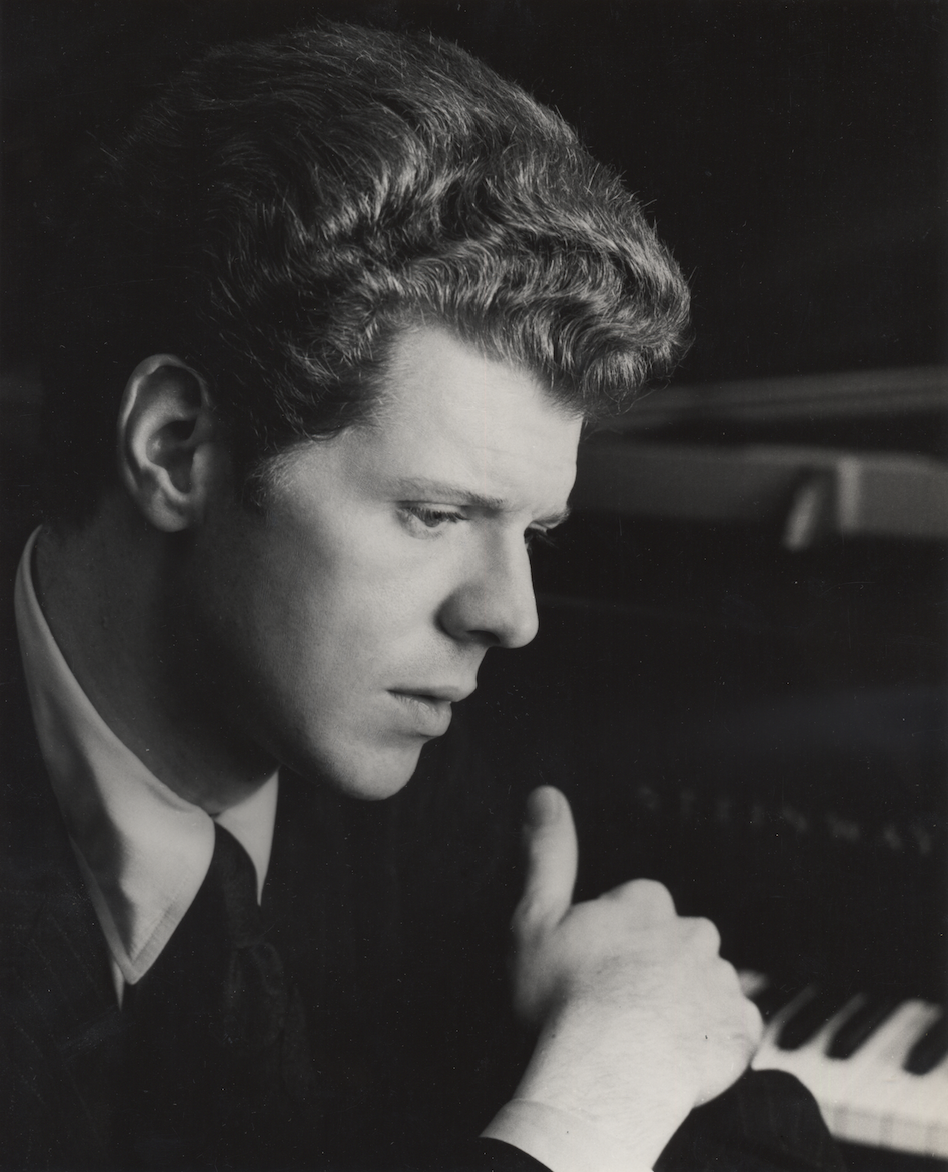
Van Cliburn. Photo © Christian Steiner
Notwithstanding the numerous accolades Cliburn received, the Kennedy Center Honors, the Grammy Lifetime Achievement Award, the Presidential Medal of Freedom, and the National Medal of Arts, The Inspired does not shy away from describing the darker side of such celebrity, including Cliburn’s performance anxiety, eccentric behavior, and substance abuse. The myriad nuances and contradictions of creation and artistic musical performance are perhaps best exemplified in Inverne’s in-depth description of Cliburn’s agitated recording session for RCA Victor, bringing his personal astrologist along to predict its alignment with the stars.
The unique circumstances around Cliburn’s win in Moscow made a particularly strong case for the higher calling of truth found in the arts. ‘...That music is pure, and its purity speaks to all of us. And if you tell me that the jury is comprised of great Russian pianists, with the involvement of Shostakovich himself, then I believe they will not be able to help themselves but respond to the music, and only to the music.’ In 1962, in its namesake’s honor, these high expectations for the art form led volunteers in Fort Worth, Texas, to establish the Van Cliburn International Piano Competition, now widely regarded as one of the world’s most prestigious international competitions. (Inverne, James. The Inspired, March 2026, p/54)
The piano pervades
James Inverne sets us up for that oddly comforting fantasy that art could briefly silence the machinery of propaganda and power, only to shatter it entirely. Part psychological study, part historical reimagining, the novel spans nearly eight decades, intertwining the lives of Cliburn, Professor Dayan, an Israeli émigré who has taught piano at a Miami conservatory since the eighties, and Lillya, his gifted Russian pupil, during the last few semesters. Tracing how their pianism perseveres through eras of faith and exhaustion, Inverne reexamines Cliburn’s Moscow triumph – the American pianist stepping into ideological crossfire – against new dissonances: Russia’s war in Ukraine, the Hamas massacre of October 7, war in Gaza and ensuing Anti-Israel protests, the slow erosion of cultural dialogue, and the way artistic expression becomes suspect under nationalism.
As a cultural critic and former editor of Gramophone magazine, Inverne draws on an expert understanding of the classical tradition, the much-queried nature of what defines artistic greatness, and the uncertain place of competitions in the digital age.

James Inverne
Juilliard back then
Through carefully drawn flashbacks, he recreates Cliburn’s prodigious early life and the eminent traditions of piano pedagogy, tracing them back to the composers/performers of the Romantic era, such as Liszt and Chopin, and then with Scriabin and Rachmaninov, to the often-deemed enigmatic virtuosity of the Russian School of Piano. The emigration of Russian and, most notably, Russian-Jewish musicians had a considerable impact on the curriculum at American conservatories such as New York’s Juilliard School, where Cliburn pursued his musical education under the tutelage of the highly regarded Rosina Lhévinne, who had fled the antisemitic environment of the pre-revolutionary Russian Empire, with quotas restricting Jewish pupils at the Moscow Conservatory.
From 1951 (aged 17) to 1954, under her guidance at Juilliard, Cliburn absorbed that formidable tradition, building on the pianistic foundation laid by his mother, a trained pianist herself since earliest childhood, who counter-balanced serious studies with an unselfconscious joy found in intimate duets and popular songs played together at the piano. Inverne makes it clear that these moments of joy and wonder have substantially contributed to Cliburn’s artistic depth and fragility, linking his public-facing art and personal identity most distinctly.
While Cliburn never intended to teach, Dayan, the novel’s second narrator, thrusts us into another realm in music. Shadowed by personal loss, he left Israel to pursue a teaching career within US academia. He assigns his gifted student, Lillya, a visiting student from Russia preparing for the same competition that made Cliburn famous — an unusual project: to research Cliburn’s life and consider what once united nations, if anything, it can offer her generation now.
Does music conquer all?
What starts as an academic task becomes an act of self-reckoning, linking two very different Russian realities, past and present. As Lillya struggles to relate Cliburn’s mid-century diplomacy to the fractured present of Russian performers’ boycotts and her increased social estrangement from her Ukrainian friend and colleague on the university’s Floridian campus, her music's priorities shift as well.
Through Dayan’s lens, Inverne scrutinizes the now increasingly naïve-sounding conviction that ‘music conquers all,’ vis-à-vis such all-out combat zones, including, after October 7, a war he thought he had left behind to campus life in America. With the characters’ choices of conformity and defiance, the novel asks what remains of harmony—between people, cultures, or ideals—when any belief in empathy itself has broken down.
For all its historical scaffolding, Inverne allows the reader to feel the weight of history without forcing an argument. Seamlessly moving between documentary realism and interior reflection, Inverne writes with measured empathy for his characters. Cliburn emerges not as a saint of diplomacy but as a man undone by his own reputation imposed on him by others—alone in hotel rooms, performing night after night to meet the world’s need for reassurance. The Inspired concerns itself less with geopolitics than with the strain of maintaining belief—of trying to create art and communicate, in an era of cynicism.
Cliburn’s musical parables seem to offer the only possible practical advice to the human condition: ‘The challenge, his teacher, Madam Lhévinne, had told him, is how to counter those mammoth orchestra chords at the concerto’s start. The answer is, you don’t. Reply to them, don’t try to match them. That’s how you take command.’ (Inverne, James. March 2026. The Inspired, page 223)
By its final pages, The Inspired loosens its narrative into reflection. The Cold War’s narrative of cultural supremacy has swiftly mutated into today’s culture wars; the same patterns recur, with perhaps even less scrutiny. Russia and America again regard each other with suspicion. Israel faces the old paradox of survival and isolation. The novel's characters no longer seek victory but a possibility of living without numbness. Cliburn’s innocence, Dayan’s fatigue, and Lillya’s disillusionment present three variations on the same moral theme: how to sustain faith, and in what. Art does not prevent catastrophe; it testifies to what catastrophe leaves behind.
The Inspired is available on Amazon and at Barnes & Noble